
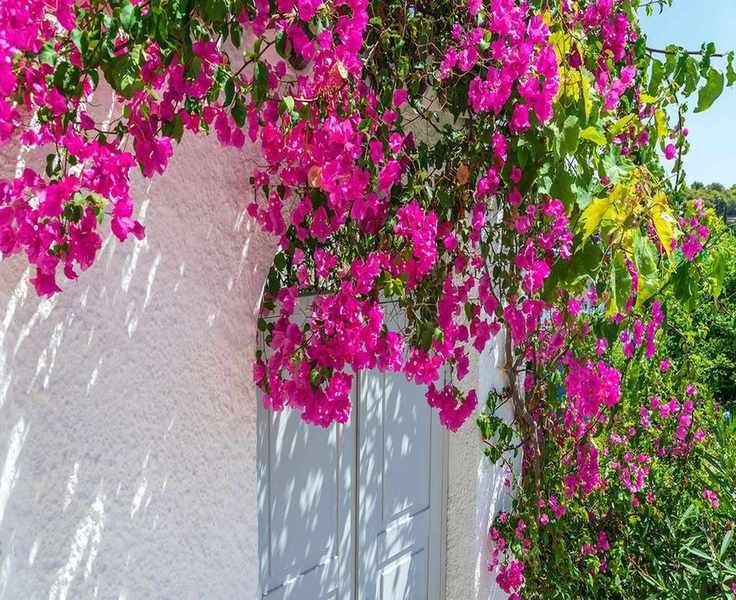
Bougainvilleas are stunning plants known for their vibrant blooms that often overshadow their leaves. These vigorous vines can flourish with proper pruning and care.
While bougainvilleas thrive in USDA Zone 9 and above, they won't survive colder winters. In regions with harsh winters, they can be grown in containers, pruned to a manageable size, and moved indoors when frost threatens.
These climbing plants present a spectrum of flower colors, including orange, yellow, apricot, red, purple, magenta, pink, and white. Interestingly, the actual flowers are tiny and white, while the vibrant colors come from the surrounding papery leaves called bracts, which attract pollinators and stay colorful for long periods.
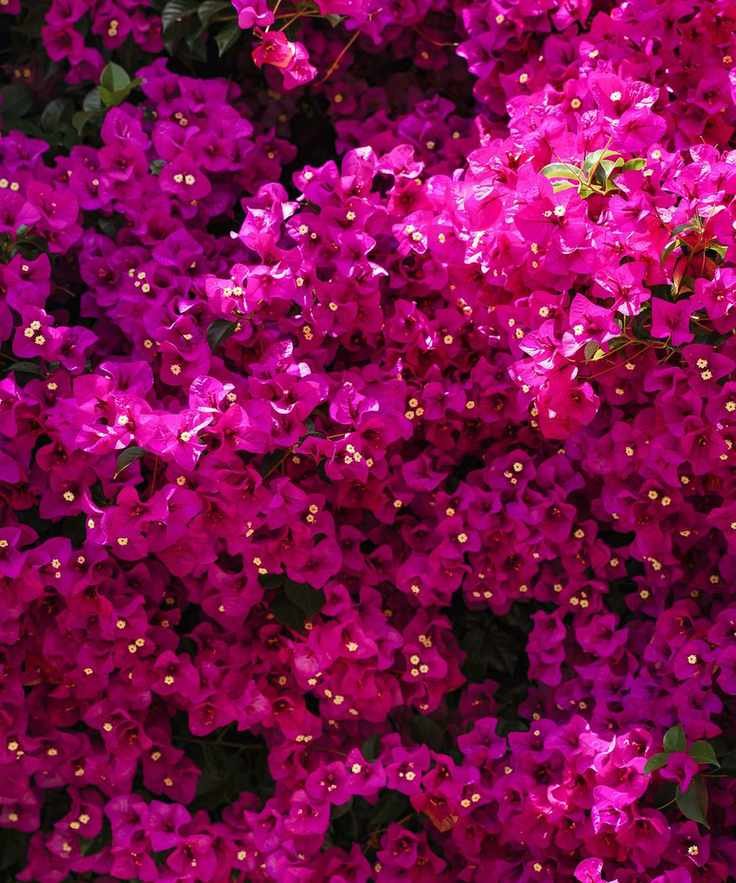
The striking bracts are the highlight of bougainvilleas
Essential Bougainvillea Facts
- Plant type: Thorny, sprawling evergreen vine
- Mature size: 8-20ft+, depending on variety, fertilization, climate, and pruning
- Soil type: Well-drained
- Soil pH: Acidic
- Light requirement: Full sun
- Best planting time: Spring, summer
- Blooming season: Spring, summer, fall
- Flower colors: Orange, pink, purple, red, white, yellow, and more
- Hardiness zones: USDA Z9
- Scientific name: Bougainvillea
- Common name: Bougainvillea
Selecting Bougainvilleas for Your Garden
Choosing bougainvilleas is straightforward. Consider whether you have space for larger varieties or need compact types suited for containers. Think about your preferred flower colors and if you want a variety that looks appealing even without blooms.
Bougainvilleas can be categorized into four size groups: dwarf, semi-dwarf, medium, and large. They also vary in foliage; while most have green leaves, some display attractive variegation.
- Dwarf bougainvilleas: These reach about 3-6ft, making them perfect for hanging baskets, container gardening, or small ground cover. Varieties include 'Pink Pixie' (pink flowers with bright leaves) and 'Yani's Delight' (cream and pink hues, ideal for hanging baskets).
- Semi-dwarf bougainvilleas: Growing 6-10ft tall, these are suitable for large planters or as ground cover. Notable options include 'Bengal Orange' (pinkish-orange blooms with variegated leaves) and 'Miss Alice' (white flowers with fewer thorns).

Bougainvillea 'Miss Alice'
- Medium-sized bougainvilleas: These reach 10-12ft and make bold additions to large gardens, creating colorful barriers. Consider 'Imperial Delight' (pink blooms, good for hard pruning) or 'Purple Queen' (purple flowers, great ground cover).
- Tall bougainvilleas: These can exceed 20ft, perfect for covering unsightly structures. Look for Camarillo Fiesta ('Monle') (pink and gold flowers) or 'Barbara Karst' (vivid hot pink flowers).
- Variegated varieties: Featuring colorful flowers with variegated leaves, options include 'Blueberry Ice' (lavender-blue flowers) and 'Bengal Orange' (pinkish-orange blooms).
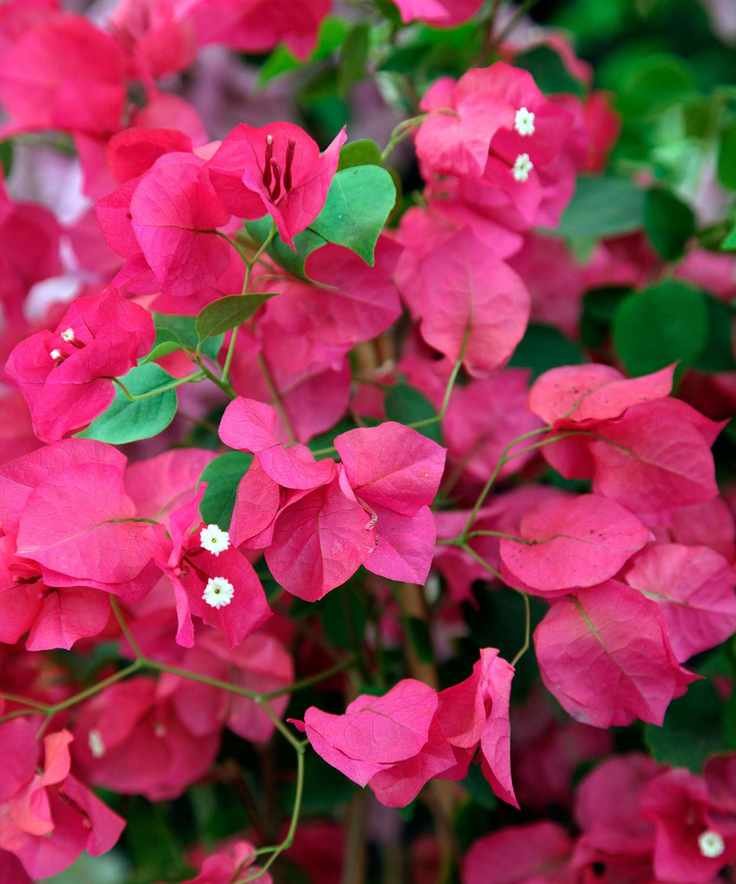
Bougainvillea 'Barbara Karst'
Optimal Growing Conditions for Bougainvilleas
While bougainvilleas can tolerate light frost, they generally thrive in frost-free regions, ideally USDA Zone 9 and higher.
For optimal growth, full sun is essential. In hotter areas, they may handle a few hours of shade, but deep shade will hinder blooming. Ensuring good drainage is crucial, so consider planting on slopes or in sandy soils. Given their vigorous growth, they should be supported adequately to prevent sprawling.
In colder climates, using well-drained potting soil in containers is advisable. This allows for easy relocation to protected areas during winter.
Some gardeners treat bougainvilleas as annuals in colder zones, replanting each spring.
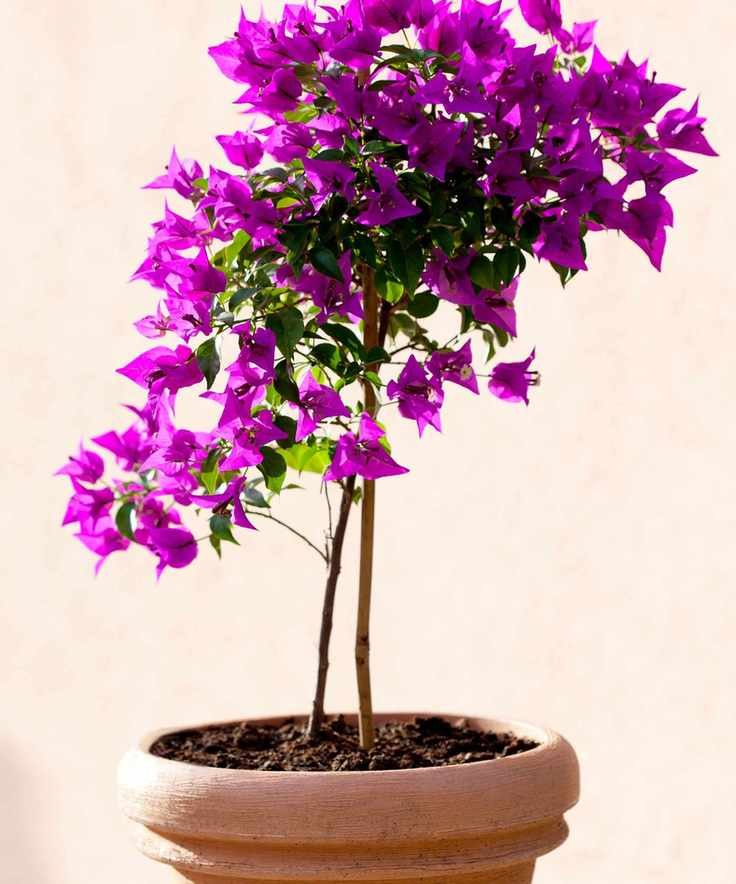
In chillier climates, keep bougainvilleas in pots for easy indoor overwintering
Planting Bougainvilleas
Plant bougainvilleas in spring or early summer. Their roots are delicate, so avoid disturbing them too much when planting. Dig a hole larger than the root ball, mix in some quality garden compost, and place the plant, ensuring the potting soil is level with the surrounding ground. Fill in with soil gently.
Ensure they have enough room to grow without crowding nearby plants, and position them away from paths to minimize accidental contact with their thorns.
Care and Maintenance
Once established, bougainvilleas require minimal upkeep. They thrive in dry conditions and seldom need watering.
However, regular fertilization is vital for healthy growth. Use a specialized bougainvillea fertilizer, such as Bougain, to keep them thriving.
Pruning is generally unnecessary, but if they become too large or have dead branches, trim them back. The best time to prune is after the main spring bloom, which encourages fresh growth for more flowers. Always wear gloves and eye protection to guard against thorns.

Prune bougainvilleas after their primary spring bloom
Propagating Bougainvilleas
Layering is the easiest method for propagating bougainvilleas, though it takes time.
In spring, find a low branch near the ground. Clear weeds and dirt at the point where it touches the soil, burying the branch about an inch deep. Firm the soil around it and place a weight to keep it in place. After several months, roots should form. Cut the new plant from the parent and relocate it.
Common Issues and Solutions
Bougainvilleas face few pests and diseases. Prevent root rot by avoiding overwatering.
Nutrient deficiencies can lead to pale leaves and increased susceptibility to disease, so regular fertilization with Bougain is essential.
Sooty mold may appear but is manageable. This fungus grows from the residue of sap-sucking insects like aphids. Treat with an organic pest spray or a homemade mixture of dish soap and water.

Bougainvillea vines showcase a spectrum of colors including orange, pink, and white
Purchasing Bougainvilleas
Buying bougainvilleas online gives access to a wide variety. Many websites feature clear images and descriptions of each type.
Look for smaller plants in 2 1/2in pots for economical shipping. Larger plants are available but may incur higher shipping costs.
In regions where bougainvilleas grow well, check local nurseries and garden centers for larger specimens.
FAQs
Are bougainvilleas resistant to deer?
Generally, bougainvilleas are deer-resistant but may be browsed if food is scarce. A deer fence is the most effective way to prevent damage, though some gardeners tolerate minor browsing.
How should you overwinter a potted bougainvillea in Zone 7?
Potted bougainvilleas can be kept in a frost-free location, such as a garage or basement. Water every three to four weeks to keep them from drying out completely. They may shed leaves but will remain alive. In spring, move them to a bright, frost-free spot and resume watering and fertilizing.
Are there thornless varieties of bougainvillea?
Yes, a few thornless varieties exist, suitable for families. Examples include 'Miss Alice' (white flowers) and 'Silhouette Lila' (lilac flowers).
Bougainvilleas thrive in dry, sunny conditions and are ideal for areas unsuitable for many other plants. Smaller varieties also make great container plants, tolerating occasional missed waterings.



