
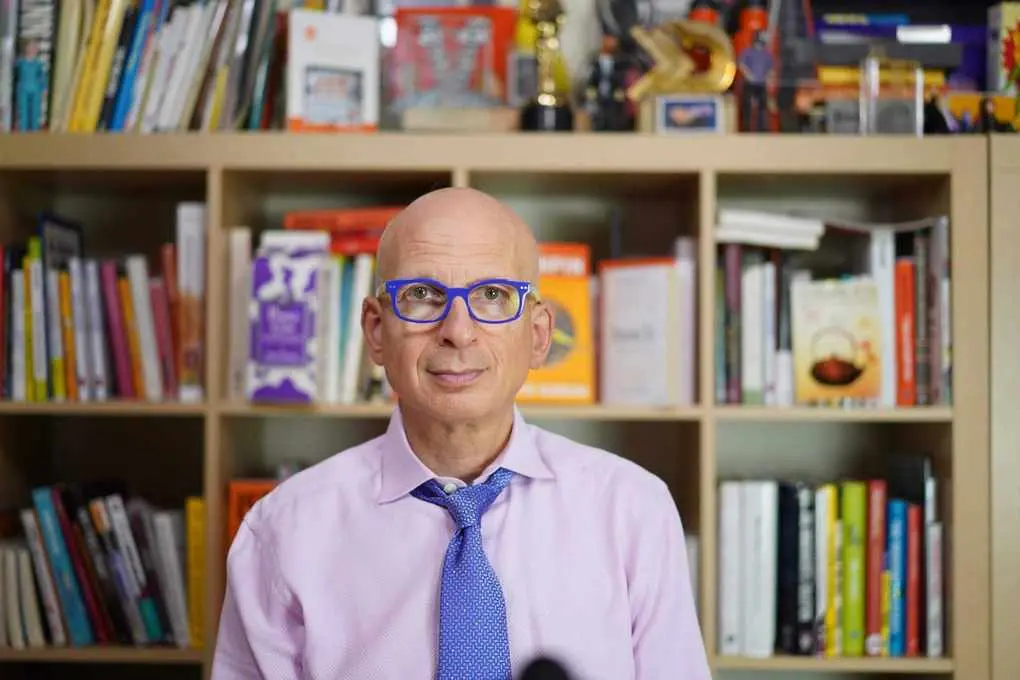
How well do you honor your commitments? This question is central to your personal brand.
This week's episode dives into introspection with marketing expert Seth Godin. Are you someone who consistently delivers on promises? If that thought weighs on you, don't stress! Seth has powerful insights that will reshape how you view commitments and your personal brand. As the author of 19 influential books, including best-sellers like "Linchpin" and "This Is Marketing," and founder of workshops like ALT-MBA, Seth's expertise is vast. He was also inducted into the Marketing Hall of Fame in 2018.
Seth emphasizes that your personal brand—and possibly your career—is defined by one key question: Do you fulfill your promises? Every interaction communicates who you are, and your brand is simply a promise you must keep.
Join us as Seth sheds light on effective marketing, the subjective nature of spam, and the importance of avoiding quick fixes for immediate discomfort. He discusses how our primal instincts influence our daily choices and how we can harness those instincts for better decision-making.
In our Mailbag segment, Jean addresses a listener's query about investment strategies after maxing out their 401(k) and shares tips for saving for retirement in your 50s. She also offers advice for a homeowner considering liability insurance and refinancing options.
Finally, in Thrive, Jean examines the surprising trend of some private colleges lowering tuition. However, this often comes with cuts to scholarships and discounts, meaning the net cost remains unchanged. Always check the net price before committing to a college expense!
Transcript
Jean Chatzky: (00:06)
This podcast is supported by Fidelity Investments. Demand more from your financial journey by understanding your assets and obligations at fidelity.com/demandmorenow. Today, I'm excited to welcome Seth Godin. Thank you for joining us!
Seth Godin: (01:41)
Thanks, Jean. It's great to be here.
Jean: (01:43)
I appreciate that! Your insights on personal branding are invaluable. Can you explain the importance of keeping your word?
Seth: (02:24)
Absolutely! Attention and trust are scarce resources today. Many organizations struggle with this. They often resort to spam, which erodes trust. Instead, we should strive to be the trusted voice people seek out. Trust is built by making and keeping promises.
Jean: (03:14)
I read about spam calls evolving into text messages. It's fascinating how some messages are welcomed while others are not. For instance, I enjoy updates from my favorite consignment shop.
Seth: (03:59)
Exactly! If the communication feels valuable, it's not spam. Spam is subjective. Many marketers focus solely on themselves, disregarding what the audience values.
Jean: (04:39)
That's a refreshing perspective!
Seth: (04:39)
Indeed. My experience with email marketing showed that focusing on the audience leads to higher engagement. Companies like Amazon thrive on trust and permission.
Jean: (05:17)
That's insightful. Can you share more about your background?
Seth: (05:23)
I've had my share of failures and successes. I started one of the first online games for Prodigy before the internet boom. This taught me about managing attention and trust.
Jean: (06:23)
It's nostalgic to hear about Prodigy!
Seth: (06:39)
Indeed! It revolutionized communication and created new opportunities for connection.
Jean: (07:35)
How can we ensure we're not wasting others' time while building our personal brands?
Seth: (09:18)
It's essential to create value for your audience. Engage meaningfully and focus on building genuine relationships within your community.
Jean: (09:49)
You emphasize that being profitable isn't synonymous with being important. Can you elaborate?
Seth: (09:49)
Of course! It's better to have a small, engaged audience than a large, indifferent one. Focus on meaningful connections.
Jean: (10:20)
That's insightful! How does this relate to increasing income?
Seth: (11:41)
Thanks for the important work you do! Nowadays, more people are freelancing or partaking in the gig economy. The key is to find better clients that value your skills.
Jean: (13:35)
That's a great point. Let's focus on how to be smart with our spending!
Seth: (15:03)
Sure! Borrow for appreciating assets only. Avoid borrowing for depreciating items.
Jean: (15:28)
And about real estate?
Seth: (15:34)
Real estate can be tricky. It doesn't always appreciate, and sometimes, borrowing can lead to debt.
Jean: (15:53)
What about cars?
Seth: (16:25)
Car loans often lead to a cycle of debt. Saving for a used car is more beneficial long-term.
Jean: (17:16)
That's a valuable perspective. What's rule number two?
Seth: (17:19)
Don't spend to alleviate short-term discomfort. Consider long-term benefits over fleeting pleasures.
Jean: (18:50)
That's insightful. Can you share how you determine your speaking fees?
Seth: (19:09)
I base my fees on the time needed to travel. I value my time highly.
Jean: (19:50)
How do you spend money for enjoyment?
Seth: (20:05)
I love giving back through community involvement. It brings me joy without the clutter of possessions.
Jean: (20:48)
That's inspiring! Can you explain how our primal instincts affect our decision-making?
Seth: (21:10)
Our instincts drive us to react quickly to perceived threats. Marketers exploit this by triggering fears of missing out.
Jean: (22:16)
How can we manage these urges?
Seth: (22:18)
Recognize the signals from your instincts and consciously choose your responses. It's essential to be aware of these reactions.
Jean: (22:53)
That's practical advice. How can we get in touch with you?
Seth: (24:41)
Visit akimbo.com for my books and workshops.
Jean: (24:47)
Thank you, Seth. It's been a pleasure!
Kathryn Tuggle: (25:07)
His calm demeanor is quite meditative.
Jean: (25:09)
I agree! He simplifies complex marketing concepts.
Kathryn: (25:31)
Do you think keeping promises is key to personal branding?
Jean: (25:38)
Absolutely! It's about being trustworthy, especially in financial matters.
Kathryn: (26:07)
We must ensure our information is accurate and reliable.
Jean: (26:58)
Exactly! We need to be diligent in our reporting.
Kathryn: (27:12)
Let's focus on clarity and understanding for our audience.
Jean: (28:03)
Indeed! Let's prioritize important messages.
Kathryn: (28:21)
What questions do we have today?
Kathryn: (28:29)
Great questions in our Mailbag today!
Jean: (28:34)
Let's see what we have!
Kathryn: (28:36)
Our first question is from Unsure in San Diego.
Jean: (28:37)
Let's hear it!
Kathryn: (28:38)
Hi Jean! I'm 40 and my husband is 45 with two kids. I feel behind in investing but have over $100,000 in cash. We have a rental property mortgage of $230,000 at 4% and a primary mortgage of $640,000 at 4.125%. I'm maxing out my 401(k) contributions. Should I use my cash to pay off loans or invest it?
Jean: (29:23)
This is a trade-off question. Numbers suggest investing your cash, as your mortgage rates are relatively low. A diversified investment portfolio aligns with your age and goals.
Kathryn: (31:19)
That's solid advice.
Jean: (31:21)
I agree! This needs to be long-term money.
Kathryn: (32:12)
What's our next question?
Kathryn: (32:16)
Next, we hear from Maura in Pennsylvania. She expresses her appreciation for the podcast!
Jean: (32:23)
That's wonderful! Thanks for tuning in!
Kathryn: (32:40)
She asks how to maximize retirement contributions at 51. Any suggestions?
Jean: (33:32)
Yes! Encourage your spouse to open a spousal IRA, contributing up to $6,000 annually. This is a fantastic option for families.
Kathryn: (34:49)
What's required for a spousal IRA?
Jean: (34:56)
One spouse must have earned income, and the other can contribute!
Kathryn: (35:03)
That's fantastic advice!
Jean: (35:04)
Absolutely! More people should consider this option.
Kathryn: (35:45)
Next, we have Patty from California. She asks about umbrella insurance.
Jean: (35:45)
Yes, Patty! Umbrella insurance is essential for homeowners, particularly those renting out property. It's affordable and offers necessary coverage.
Kathryn: (38:22)
Absolutely! What else is on your mind, Patty?
Jean: (38:26)
Let's discuss the potential downsides of refinancing.
Kathryn: (38:26)
Yes! If refinancing saves you money and you plan to stay in your home, it's worth considering. Check with different mortgage brokers for the best options.
Jean: (38:26)
Thank you all for joining us! If you enjoyed this episode, please subscribe to our podcast. We appreciate your support!
Kathryn: (38:26)
We'll see you next week with more great content!



