
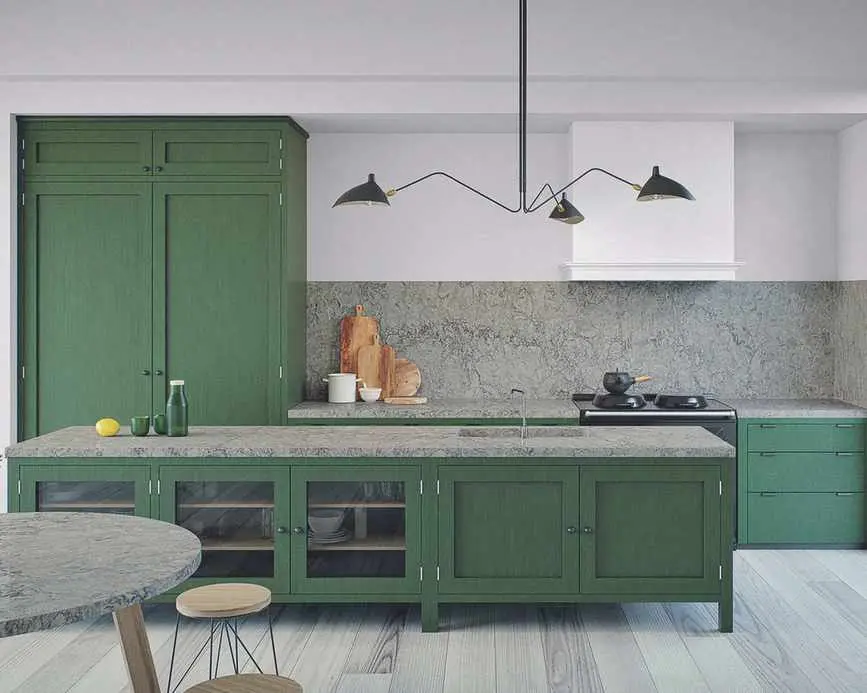
When embarking on your kitchen design journey, it's crucial to begin considering your lighting plan early on.
The kitchen serves multiple purposes – from food preparation to entertaining and even working from home. A well-thought-out lighting scheme should facilitate smooth transitions between these various activities.
Effective kitchen lighting solutions should provide varying brightness levels, allowing you to set the mood for different occasions. A thoughtfully designed lighting scheme can create a sense of spaciousness or intimacy, depending on the desired atmosphere.
"Lighting plays a vital role in kitchen design," says Daniel Bowler, Director of Eggersmann UK. "Yet, it often gets overlooked until the end. Incorporating it into your early design considerations will yield far better results."
Creating a Kitchen Lighting Plan
When devising a kitchen lighting plan, it's essential to include three types of lighting: task, accent, and ambient.
Task lighting is the brightest form, aimed at illuminating work surfaces, while ambient lighting provides a softer glow. Accent lighting, also known as feature lighting, adds visual interest to the kitchen, either through the fixture itself or the illumination it offers.

Designing a Kitchen Lighting Layout
When selecting kitchen lighting and planning your layout, start with task lighting.
"Begin by identifying areas that require particularly bright lighting," advises Daniel Bowler. Key work areas, like countertops and the stove, should be equipped with effective task lighting.
Once you've established the essential lighting foundation, consider how you want the kitchen to appear when not in use. For your ambient lighting, take into account the amount of natural light available and the mood you want to create. For kitchens that serve multiple functions, dimmer switches can be a great addition to adjust brightness levels.
Finally, enhance your lighting design with accent lighting to draw attention to specific decorative elements in your kitchen.

Choosing the Right Lighting for Kitchens
Task lighting is crucial in any kitchen and is commonly integrated into wall cabinets or above work areas. There are various task lighting options available.
Compact fluorescent lights can fit neatly into the recess at the bottom of overhead cabinets.
LED lights can be installed under cabinets or within drawers, pantry units, and other kitchen storage spaces. Ceiling-mounted lights with adjustable spotlights or pendant fixtures can also effectively focus light where needed.

Ambient lighting should emit a soft, diffused glow. You can achieve this with ceiling-mounted fixtures, recessed lights, kitchen wall lighting, or light washers.
Recessed lights, flush mounts, and semi-flush mount ceiling fixtures are particularly useful in smaller kitchens, as they don't occupy too much visual space. In kitchens with high ceilings, consider using uplighters on top of the cabinets to enhance overall illumination.
"To create a cozy ambiance in the evening, opt for lights that can shift from cool to warm," recommends Graeme Smith, Head of Retail and Commercial Design at Life Kitchens. "This versatility allows for a cooler light while cooking and a warmer light for dining or entertaining."
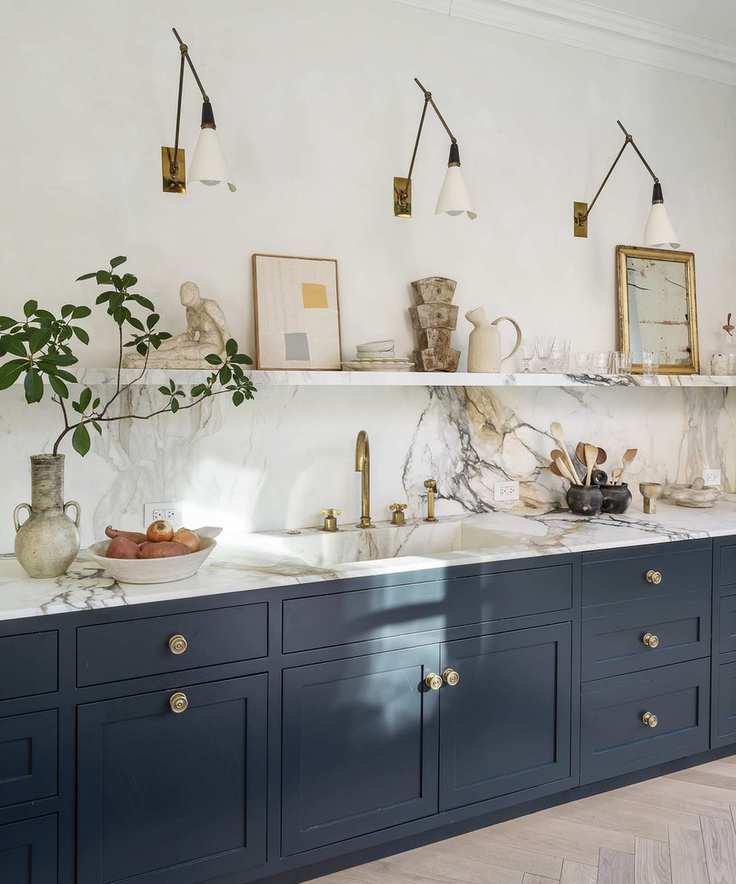
Accent lighting comes in various styles, including statement floor lamps to brighten a corner or LEDs fitted into the base of an island, giving it a floating appearance. It can also serve as backlighting to enhance the kitchen's aesthetic.

Calculating Kitchen Lighting Needs
To determine the appropriate lighting levels for your kitchen, you need to consider lumens, which measure brightness. The required brightness will depend on the kitchen's functions and the number of fixtures used.
Calculate this by multiplying the kitchen's square footage by the necessary foot-candle (light intensity). For instance, in a 100-square-foot kitchen that requires between 10 and 20 foot-candles, you'll need 1,000 to 2,000 lumens. Since bulbs emit specific lumens, divide the total lumens needed by the output of each bulb to determine how many are required.
Fortunately, a qualified lighting designer or seasoned interior designer can assist you in assessing your needs.
"If you have only one light, it should be as bright as possible and dimmable," advises Niki Wright, lighting design expert and founder of Lights & Lamps. "Planning your kitchen with various lighting options will ensure it's bright enough for all tasks."

Optimal Placement of Kitchen Lights
When deciding where to position your kitchen lights, consider the specific functions they will serve.
Task lighting should shine directly over countertops without obstruction. It should be placed to illuminate the back and center of the countertop, ensuring that your shadow falls in front of the area you are working on, providing clear visibility.
"Ensure that spotlights or pendants are positioned directly above key areas to avoid casting shadows when you're at the sink, stove, or countertop," suggests Melissa Klink, Head of Design at Harvey Jones.
Accent lighting should be strategically placed to highlight any decorative or architectural features. Position the light one to two inches from the back of a shelf for a backlit effect.
The placement of ambient lighting will depend on your chosen fixture. Flush or semi-flush mounts typically sit above the kitchen island or directly in the center of the ceiling.
However, recessed lights should be spaced evenly across the ceiling and positioned a few inches back from the countertop edge to prevent shadowing.

Illuminating a Kitchen Island Effectively
Using a row of matching statement pendants is a stylish way to light your kitchen island, creating an attractive focal point while providing functional task lighting.
However, Niki Wright encourages a more imaginative approach to kitchen islands. "Consider the various functions of your kitchen island. Is it solely for prep and cooking, or does it also serve as a dining and social hub?" he asks.
"A mix of dimmable recessed downlights combined with a decorative pendant or even a chandelier can significantly enhance the ambiance of the space."

Are LED Lights Suitable for Kitchens?
LED lighting is an excellent contemporary choice for kitchen illumination – they're eco-friendly, generate minimal heat, and can replicate natural daylight.
Cool white LED lights are ideal for kitchens, whether used for task, accent, or ambient purposes. To select the right color temperature, check the Kelvins; a bright or cool white light typically falls around 4,100 Kelvins.
"In a kitchen, avoid going below 3,000 Kelvins, as the light can appear overly yellow," advises Niki. "However, with dimmable options, you can adjust the lighting to create the right atmosphere for cooking or dining."



