
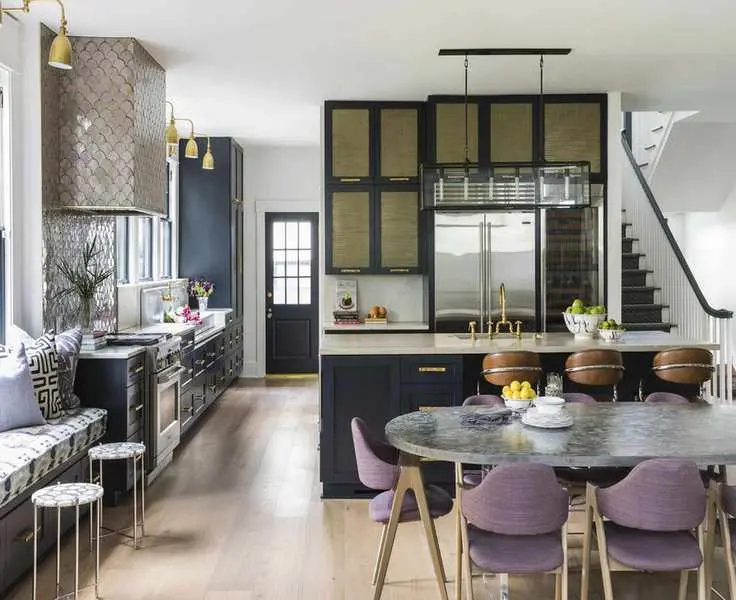
Lighting plays a pivotal role in every room of your home. It not only needs to be aesthetically pleasing but also must provide the appropriate brightness for various activities such as cooking, reading, and unwinding. In the kitchen, where meal preparation and dining often occur, achieving the right light levels is more crucial than many people realize.
So, how do you determine the ideal lighting for your kitchen? We consulted with interior designers and lighting specialists to break it down — from understanding lumens to selecting the best fixtures for each area.
“Start with the natural light available — nothing compares to the brightness of a sunlit kitchen in the morning — but we all need artificial lighting for consistent brightness from dawn until dusk,” explains Lucinda Loya, an interior designer. “The aim is to achieve a balance between natural light, task lighting, and ambient lighting to create a kitchen that is both beautiful and functional.”
Calculating Lighting Needs for Your Kitchen
Begin by measuring the size of your kitchen. Measure the length and width in feet, then multiply these figures to determine the total square footage.
Next, familiarize yourself with foot candles, which measure light intensity. Different areas require varying levels: a kitchen typically needs about 30 to 40 foot candles for general use, whereas work areas such as countertops and islands require around 70 to 80 foot candles.
The lumen is another important unit, indicating how much light a bulb emits. The more lumens, the brighter the light. To calculate your needs, multiply your kitchen's square footage by 30 and 40 to get a range of required lumens. For instance, for a kitchen of 100 square feet, you'd need between 3,000 and 4,000 lumens. For work surfaces, multiply the area in square feet by 70 to 80 foot candles.
After determining the total lumens required, divide this number by the lumen output of your chosen bulbs or fixtures to find out how many you'll need.
Keep in mind that the colors in your kitchen can influence light levels. “Darker cabinet finishes absorb more light, reducing the amount that reflects back into the room,” says Luke Thomas, Design Director. “It’s vital to place lights where they are most needed — on worktops, the sink, and the dining area. The contrast between light and shadow can enhance the brightness of those spaces.”
Creating Layers of Lighting in Your Kitchen
Think of your kitchen lighting in three layers. The first layer is ambient lighting — the general light provided by windows and overhead fixtures.
“Pendant lights above an island are a classic choice for ambient lighting,” Thomas notes. “Directional downlights around the perimeter can reflect light off cabinets or artwork, making the entire space feel larger and brighter. If your wall cabinets don’t reach the ceiling, consider installing an upward-facing LED strip above them to add ambient light and create a sense of height in a low-ceiling kitchen.”
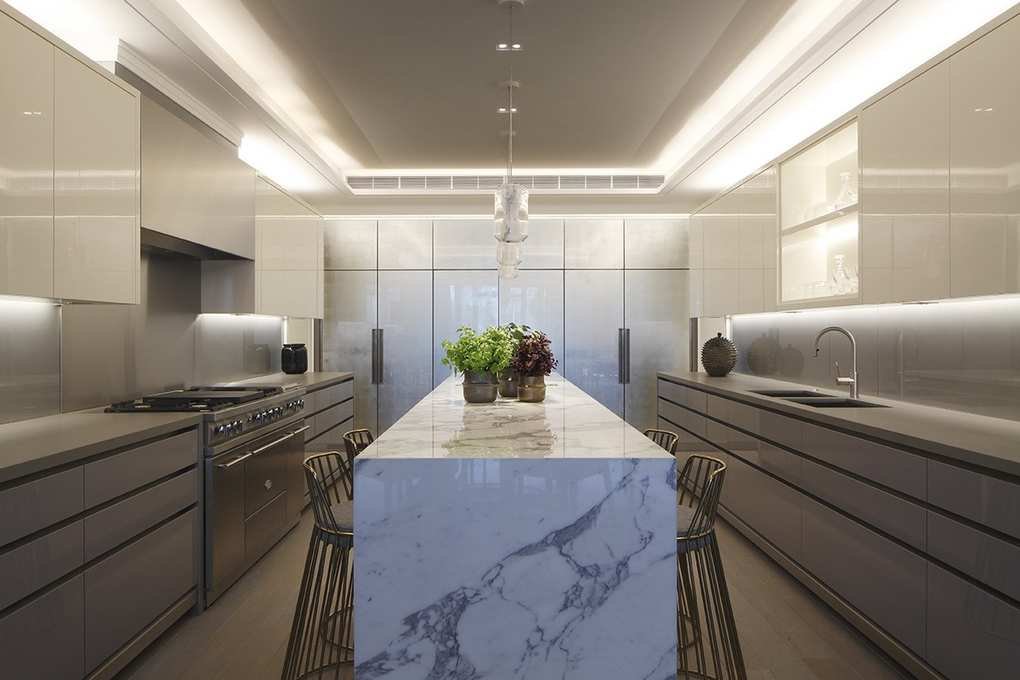
The second layer is task lighting — the focused illumination necessary for chopping, stirring, and safely reading recipes.
“Under-cabinet lights shine directly onto work surfaces and can also highlight a backsplash,” says Thomas. “Linear LED lights are currently the most popular option, but they should be positioned behind a baffle to avoid glare. For reflective surfaces, using an aluminum profile with a frosted diffuser helps to prevent spotting and simplifies cleaning.”
If upper cabinets are absent, adjustable wall-mounted fixtures can provide task lighting while adding a softer design touch.
The third layer is accent lighting — while not essential for functionality, it is vital for ambiance. This type of lighting emphasizes architectural features, artwork, or open shelving. Consider using wall lights or shelf strips for this purpose.
Lighting Your Kitchen Dining Area
Whether you have a kitchen island or a separate dining table, the eating area requires its own lighting strategy.
“Pendant lights are currently quite trendy — many clients opt for three pendants above the island,” shares Richard Moore, Design Director. “Three pendants offer enough light for ambiance without overwhelming the space. For larger islands, you may need additional fixtures. Ensure they are spaced evenly to illuminate the entire surface symmetrically.”
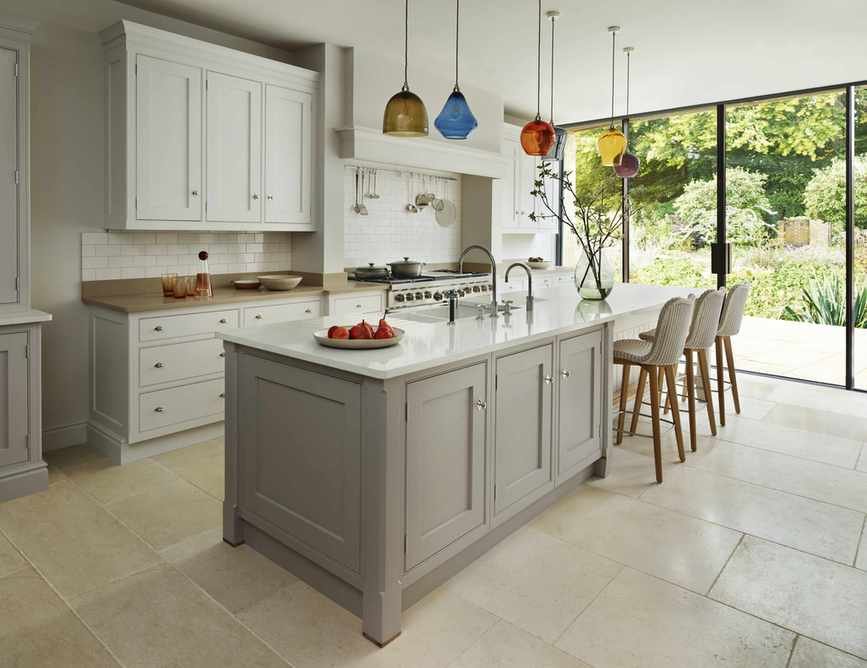
Pay attention to the shade material as well. “Glass or open shades allow more ambient light to filter through,” explains Courtnay Tartt Elias, founder of a design firm. “Metal shades focus light downward, making them suitable for task lighting above an island.”
A chandelier or a bold pendant light above the dining table can make it a focal point, visually separating it from the cooking area.
Assessing Your Kitchen’s Light Requirements
Start by evaluating the natural light your kitchen receives — consider the number of windows, their orientations, and whether you have skylights. Window treatments also influence light levels; sheer curtains permit more light than heavy drapes.
“We always consider the number of windows, how adjacent rooms affect light, and the presence of recessed lights,” notes a Chicago-based interior designer.
“If your kitchen lacks windows, skylights are an excellent solution,” adds Elias. “They may be less common now, but they can dramatically brighten a dim kitchen.”

Once you’ve factored in natural light, incorporate artificial lighting sources. “In this kitchen (shown above), you see numerous functional ceiling fixtures that can flood the room with bright light while cooking,” states Benjamin Johnston, a designer. “Ensure they are dimmable to allow you to gradually brighten the room in the morning. The cooktop also features task lighting integrated into the exhaust hood, while decorative pendants above the island provide mood lighting when the overhead lights are off.”
Choosing the Best Lighting Types for Your Kitchen
A combination of fixture types is more effective than relying solely on one. For ambient light, consider recessed lights, flush mounts, track lighting, or pendants. For task lighting, use under-cabinet fixtures, wall-mounted lights, and some pendants or recessed spots. Accent lighting can be achieved with shelf strips or wall sconces.
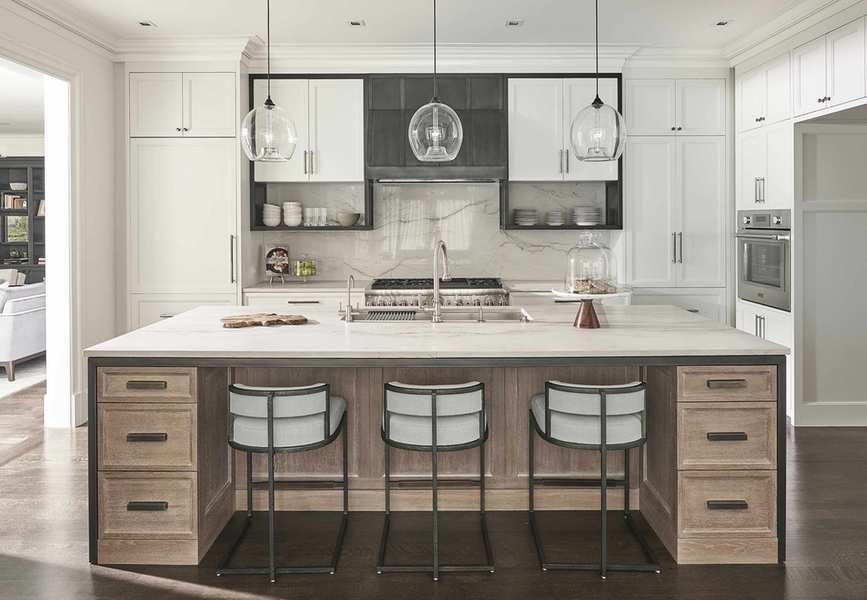
“Don’t overlook unique lighting elements,” Johnston emphasizes. “While under-cabinet lighting has been a staple for years, we are now incorporating LED strips inside drawers and cabinets to make it easy to find what you need.” This is a smart addition for any modern kitchen.



