
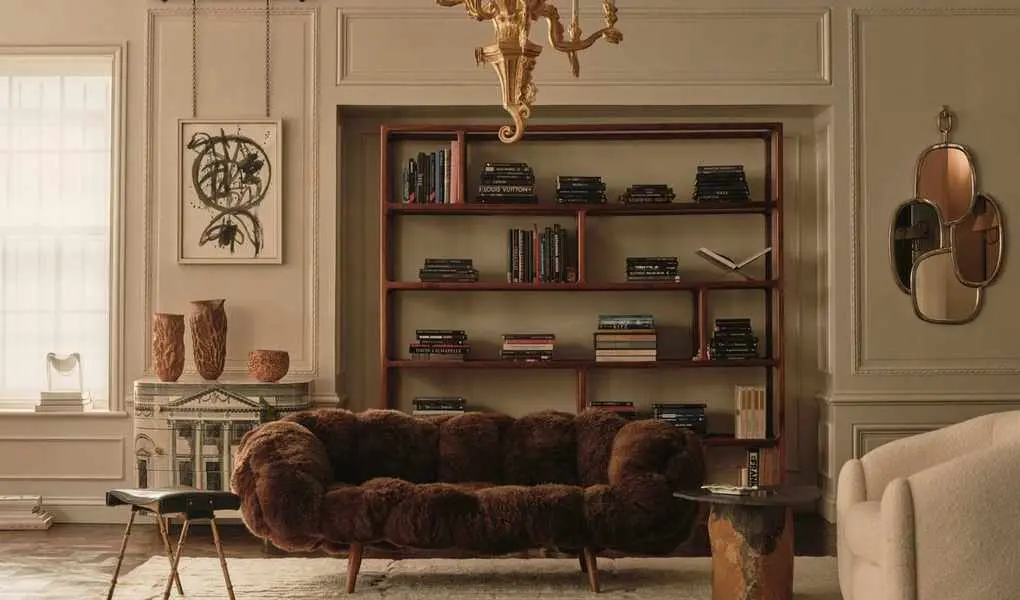
If you've ever noticed how a designer's neutral living room appears vibrant while your own version feels bland, the issue is likely texture instead of color. As we step into 2026 with even softer color palettes, texture becomes essential for adding depth and interest without relying on hues.
This tactile-first design approach proves invaluable for those who prefer minimal color but is applicable across various design styles. Mixing materials, including those that may not be obvious, enriches a room, giving it character and sophistication. Texture influences both the visual appeal and the actual feel of a space.
You might already use texture without realizing it, such as the interplay between smooth wood and soft velvet, or the contrast of limewash with wrinkled linen. The key difference between your choices and a designer's lies in the intentionality behind these combinations. Below, experts reveal how to master surface effects and utilize texture when color takes a backseat.
Understanding Texture and Its Significance
'Texture is a room's sensory language,' says Madelynn Hudson, founder and creative director of M.H. Interiors. 'It adds dimension and engages emotions. You encounter it daily without noticing: the grain of wood, the softness of mohair, the coolness of stone, the texture of linen, and the contrast of matte and shiny surfaces.'
Texture isn't merely a design trend or seasonal gimmick; it's a vital element. A well-decorated room without texture can feel lifeless, especially with subdued color schemes. 'Texture is crucial for keeping a space visually appealing, particularly in neutral tones. It prevents rooms from feeling sterile and instead makes them warm and inviting, regardless of the season,' Madelynn adds.
6 Techniques Designers Use to Incorporate Texture at Home
Texture is often subtle and less obvious than a shaggy rug. Designers harness it to create visual intrigue that often goes unnoticed. Here are their favored methods and how you can implement them in your own home.
1. Contrast Sheen

Sheen is most effective when it interacts meaningfully with its surroundings. A lacquered table on polished stone can seem predictable; pairing it with something more tactile—like handwoven wool or textured plaster—enhances the room's depth.
'Mix materials with different reflectivities,' suggests Joy Lynskey, CEO of Jewel Toned Interiors. She recommends experimenting with bar setups: 'Consider a leathered countertop alongside smoky glass shelves. Adding textiles with both matte and metallic threads on barstools can elevate the look.'
'Combining different sheen levels—matte, satin, gloss—adds instant dimension and is a simple yet impactful change for any area,' she notes.
2. Use Handcrafted Elements

Handcrafted items bring unique texture that mass-produced pieces cannot match, not simply due to their charm but because of their inherent inconsistencies. Small variations in surface and finish break the monotony of a room.
'Handcrafted items like ceramics or carved wood lend character and authenticity,' remarks Madelynn Hudson. 'These small imperfections prevent a space from appearing overly manufactured.'
Lamps are an effective starting point for introducing handcrafted elements. Cara Shahbandi, principal designer at Stanton Home Design, suggests that even one unique lamp can refresh a sleek room. 'A vintage ceramic or glass lamp with an uneven finish can add warmth,' she notes.
3. Layer Your Textiles

Textile layering is crucial in all areas, from windows to tabletops or sofas. Sticking to a single material—like all linen or all velvet—might provide some texture, but it often reads as flat. Variety helps create depth.
Start with architectural elements: 'Layered window treatments add both function and softness,' explains Madelynn Hudson. 'Pair sheer fabrics with heavier drapes to introduce lightness and structure.'
The same principle applies to soft furnishings. 'Mix pillows with different textures,' suggests Cheryl Stauffer from Crimson Design Group. 'Combining smooth, woven, and tassel-adorned pillows can make a significant impact.' As Dan Mazzarini, principal designer at Mazzarini & Co, points out, this technique simplifies seasonal changes. 'Cotton rugs and pillows in autumn colors can create a cozy atmosphere that can be easily swapped out,' he explains.
However, layering doesn't always require abundance. Sometimes, a single contrasting textile can shift the room's balance. 'A chic boucle throw blanket can add considerable texture when draped over a sofa,' Cara Shahbandi says.
4. Choose Artisanal Wall Finishes

For a significant texture commitment, consider applying it directly to your walls. Finishes like limewash and Venetian plaster create surface variation, transforming a room's ambiance as lighting changes throughout the day.
'Venetian plaster adds both tactile and visual texture to walls,' notes Cara Shahbandi.
'Artisanal finishes introduce a depth that commercial materials can't replicate,' adds Joy Lynskey. 'Their unique irregularities reflect light in different ways, creating a subtle movement that lends sophistication to a room.'
5. Embrace Natural Materials

Natural materials convey texture even when smooth. For instance, marble, while sleek and polished, has a dynamic quality that synthetic surfaces often lack. This inherent movement is why designers favor stone, wood, and clay for authentic texture.
Jen Baxter, founder of Baxter Hill Interiors, prefers natural stone and tile for their visual drama. 'Veining and honed finishes create subtle elegance. A marble tray, stone lamp, or ribbed vase can reflect the sophistication of a fluted marble fireplace without extensive renovations,' she explains.
Natural materials also evoke outdoor references without being overt. 'Sea grass wallpaper and teak furniture bring a hint of nature that softens a room with depth,' Dan Mazzarini shares.
However, this doesn't mean relying solely on natural materials. Texture thrives on contrast. Joy Lynskey emphasizes, 'It's the interplay between materials that adds dimension. Incorporating natural elements into manmade materials enriches the space, creating a more nuanced and sophisticated environment.'
6. Explore Unexpected Textural Placements

While throws and accent chairs are the usual choices for texture, designers often maximize impact by placing texture in unexpected areas.
'Don't hesitate to take risks. Adding texture in surprising spots—under a staircase or within a recessed ceiling—can create strong visual interest,' Joy Lynskey advises. 'These unique placements invite exploration and discovery in your home.'
There's no need for a major renovation; even a small touch of plaster or wood can change a room's entire vibe. 'A few details can significantly enhance a space without overwhelming it,' Joy adds.
Texture Essentials
CB2
Toron Pedestal Table
This acacia wood pedestal table, designed by Sandra Githinji, reflects your appreciation for texture with its unique protrusions inspired by traditional African architecture.
McGee & Co.
Auburn Marble Tray
This oxblood tray by Shea McGee adds visual texture beneath sleek barware, providing depth without disrupting the surface.
TOV Furniture
Corrine Table Lamp
The natural jute texture can be spotted from across the room. Lamps like this serve as a final touch, reinforcing a charmingly imperfect aesthetic.
Threshold designed w/Studio McGee
Textured Ceramic Vase
Enhance the smoothness of fresh flowers with a vase that evokes an archaeological find, adding character to a flat bookshelf.
The Favorites
Ondine Fluted Coupe Cocktail Glass
This fluted coupe glass brings texture to the table, maintaining interest even against crisp linens and white candles.
H&M Home
Slub-Weave Cushion Cover
Slub-weave offers a shortcut to laid-back California style. Adding fringe elevates its charm. Slip this cover over existing pillows for a quick character boost.
Texture is far from superficial. It thrives on a range of materials, finishes, and scales. It exists in a sofa's upholstery and the flow of drapes, as well as in their relationship. Experimentation is key.
In a sea of beige, texture distinguishes a room that merely looks nice from one that captivates.



