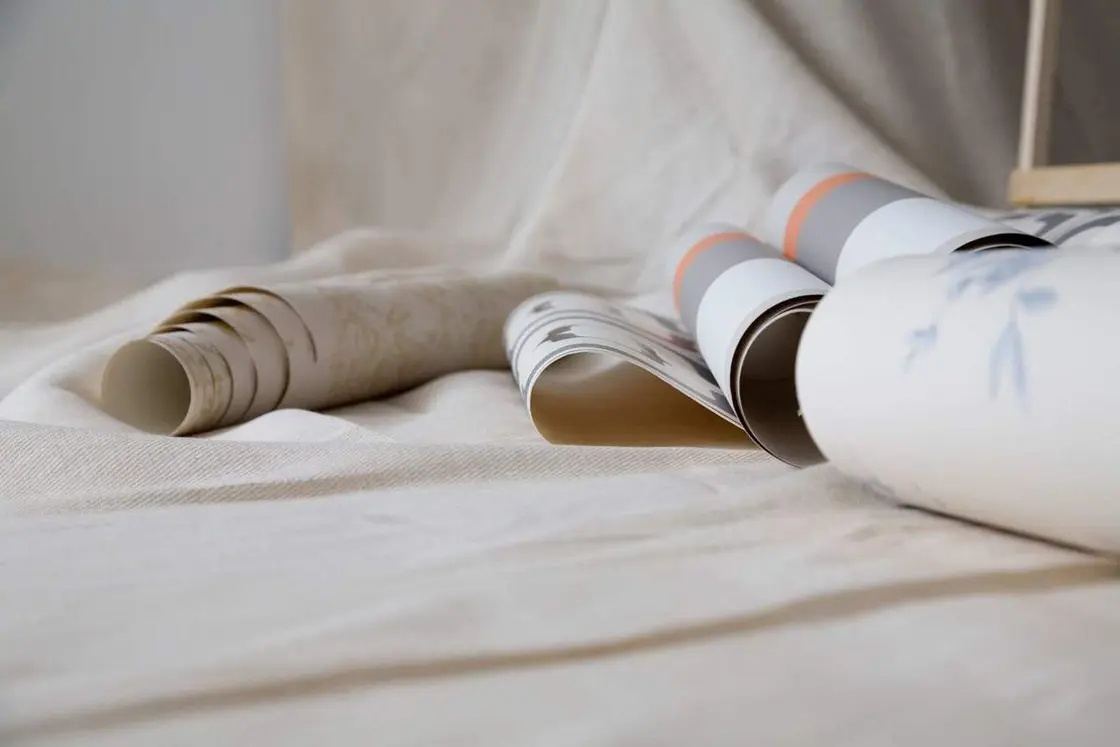
Wallpapering around a corner demands a different skill set compared to applying it on flat surfaces. While it may seem tricky, mastering the right techniques will help you achieve a polished finish.
Before tackling corners, ensure you're comfortable with wallpapering flat walls. Start by positioning the first length of wallpaper 20 inches (50 cm) from the left corner and continue until you reach the opposite side. Once you've got that down, our guide below will be essential for wallpapering corners correctly and realizing your wallpaper designs.
How to wallpaper a corner effectively
As you near the corner, measure the distance from the last installed piece of wallpaper to the corner and add an inch (2.5 cm) for overlap. Cut the next piece of wallpaper to this width, but keep the leftover piece for later use.
1. Positioning the trimmed wallpaper at the corner
"Applying wallpaper doesn't have to be daunting," explains Kirsty Mole, Decorative Home Category Manager. Carefully position the trimmed piece from the top down, ensuring it aligns well before smoothing it into the corner using a wallpaper smoothing tool or brush. The excess will overlap onto the adjacent wall. Trim any excess at the top and bottom as usual.
2. Establish a plumb line for the next wall
Many people assume walls are perfectly straight, but that's often not the case. To ensure accuracy, you'll need to create a plumb line on the new wall. Measure the width of your leftover wallpaper and mark this distance from the corner at a high point on the wall. To check for vertical alignment, tie a weight to a string, hold it against your mark, and use it to make additional marks along the wall.
3. Applying wallpaper on the adjacent wall
This step is straightforward. Hang the leftover piece against the plumb line, ensuring it fits snugly into the corner, overlapping the previous piece. For a more professional finish, James Greenwood, a wallpaper specialist, recommends using a sharp knife, like a Stanley knife, along with a steel straight edge to cut where the papers overlap. Remove excess from the top layer, then peel it back to trim the bottom layer before smoothing the top paper down to create a seamless join.
4. Handling external corners
When you encounter an external corner, cut the wallpaper similarly to how you would for an internal corner, allowing for overlap. Smooth the wallpaper into place around the corner. Just like with internal corners, create a new plumb line on the adjacent wall to ensure accuracy.
5. Wallpapering around a chimney breast
If your wall features a fireplace, start by centering the first piece of wallpaper on the chimney breast and work outwards. This ensures the design is balanced and aligns perfectly with the focal point. As you reach the external corner, carefully smooth the wallpaper onto the fireplace wall, trimming at the top where it meets the corner to allow for a smooth transition. The wrapped portion might not hang perfectly, but the overlap will remain hidden. Cut another piece to finish the reveal, ensuring you allow for an overlap at the internal corner.
Should you overlap wallpaper in corners?
When wallpapering either an inside or outside corner, wrap no more than one inch around the corner. For the next piece, overlap the section wrapped around the corner by half an inch.