

Instead of laboring over weeds and unwanted plants sprouting between your paving stones, consider embracing them. Paving planting is a stylish approach to soften your garden pathways and expand your planting area, requiring minimal upkeep once the plants are established.
This garden path concept livens up your outdoor space with minimal effort. Imagine vibrant flowering plants brightening your slabs in spring and summer, while compact evergreens add interest to your path in the winter months.
Incorporating paving planting into your garden is straightforward with a few simple steps. To guide you through this trend, I consulted a landscape designer. Here’s what he shared.
Top Plants for Paving Planting

For selecting plants for your paved spaces, you can find plenty of inspiration from rock gardens.
"If you're after color or blossoms, consider creeping thyme (available through these creeping thyme seeds from Amazon) or blue star creeper (available at Walmart)," suggests gardening expert and landscape designer Curtis Atkinson.
"Both are excellent choices, especially if you aim for a wild, natural aesthetic with ample space between your pavers," he explains.
Plants with shallow roots and those that thrive in tighter spaces will do best in narrow gaps. For example, erigeron (available with these erigeron seeds on Amazon) and dwarf mondo grass (find it at Nature Hills).
"For a more lush and vibrant look, consider Irish moss or clover (available as clover seeds from Amazon). These plants can handle light foot traffic, thrive in temperate zones, and prefer full sun," Curtis adds.
These evergreen selections can create a whimsical fairy garden ambiance, as if nature has gently enveloped the path over time.
When selecting paving plants, consider sun exposure. For areas receiving full sunlight, you might want to incorporate cacti and succulents.
If your path is in constant shade, choose ground cover plants suited for low light, like sweet woodruff (starter plants from Nature Hills).
Check out our guide on ground cover plants for more compact options that thrive in high-traffic areas, along with the best choices for crevice gardens.
Always keep in mind how large these plants will grow. Avoid selecting varieties that become bushy and obstruct the pathway.

Curtis is the founder of Sunline Landscapes, Utah's top luxury landscape design, installation, and maintenance firm, boasting over two decades of experience with discerning homeowners.
Steps for Planting
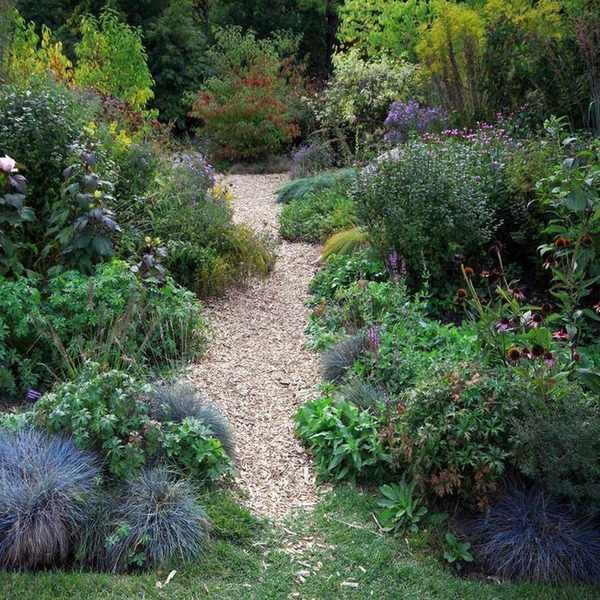
Integrating your paving planting involves ensuring a suitable growing environment.
"Most plants you place between pavers should be spaced 6-12” apart. They prefer well-drained, slightly moist soil," Curtis notes.
"All require consistent watering while establishing their roots," he adds.
Consider prepping your planting area by enhancing your garden soil. A layer of organic compost can help the plants settle in. Miracle Gro all-purpose compost from Lowe's is a suitable option.
Remember to consider plants that thrive in gravel or similar mediums, such as rock garden varieties and alpines that prefer a gritty composition.
For spreading plants, be mindful of the space they need to flourish without overcrowding.
Maintenance for Paving Planting
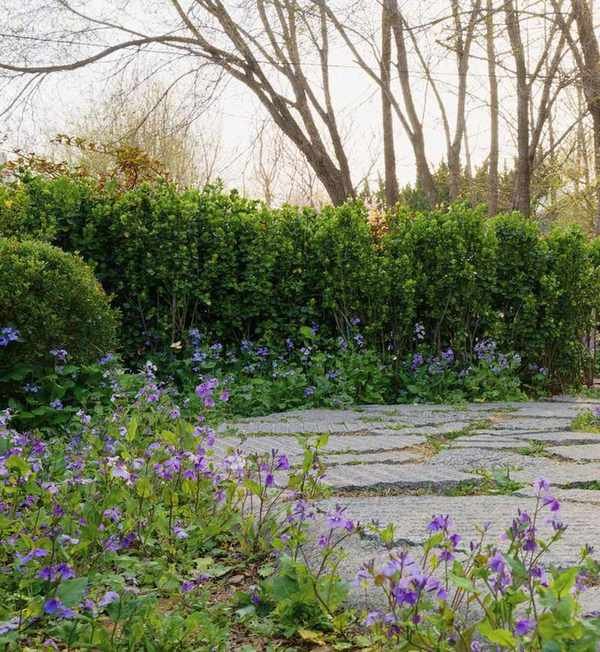
Maintaining your paving planting largely depends on the specific plants used, but here are some general guidelines Curtis recommends.
"Mosses and clover aren’t very drought-resistant. Conversely, creeping thyme and blue star creeper are relatively drought-tolerant once established," he clarifies.
To prevent your plants from drying out, keep up with watering. An automated irrigation system can simplify this task (like this drip irrigation kit from Amazon).
As for trimming, some paving plants grow more quickly than others.
"Creeping thyme needs trimming a few times from spring to summer but otherwise requires minimal care," Curtis notes.
"Creeping thyme typically grows no higher than 4”, so heavy mowing is usually unnecessary. Irish moss is similar, growing so low that it generally doesn’t need trimming or mowing," he states.
Keep an eye on how your plants spread. You don’t want them to cover the slabs or obstruct the path.
"Thin out any plants that start to encroach on areas you don’t want them in," Curtis advises.
Using garden snips (available on Amazon) can help you trim your paving plants as needed.
However, letting plants spread naturally can enhance the organic look of your paving planting, so limit excessive trimming.
Most paving plants flourish in poor soil conditions once established, making fertilization usually unnecessary. Yet, if you want to boost blooms for flowering plants, consider using bloom-boosting fertilizer in spring (available on Amazon).
Explore Gardening Essentials
Bypass Pruning Shears
These pruning shears are perfect for essential trimming tasks, cutting branches up to 1" in diameter.
Canvas Garden Apron
This stylish canvas garden apron features multiple pockets to hold tools and has a neck and waist tie for comfort.
Green Watering Can
This attractive watering can is made from durable galvanized steel, designed to withstand the elements.
If you're seeking more hardscaping inspiration, we have many stunning front yard paving ideas and gravel patio concepts that could enhance your outdoor area.



