

Trumpet vines, scientifically known as Campsis, are striking climbers that produce vibrant orange and red trumpet-shaped blossoms from mid-summer through fall.
These fast-growing plants are native to the U.S. and require regular pruning to thrive. Neglecting to trim them can lead to uncontrollable growth that may damage fences, decks, or other structures.
While pruning may seem overwhelming, it's quite manageable. In fact, trumpet vines can withstand aggressive cuts without harm. Here's a guide to help you prune effectively and keep your vine healthy.

Trumpet vines can grow up to 30 feet in a year, making pruning crucial
Why is Pruning Necessary for Trumpet Vines?
Regular pruning helps maintain the size of trumpet vines and prevents them from spreading uncontrollably. Annual trimming encourages abundant flowering and supports the overall health of the vine.
Optimal Timing for Pruning
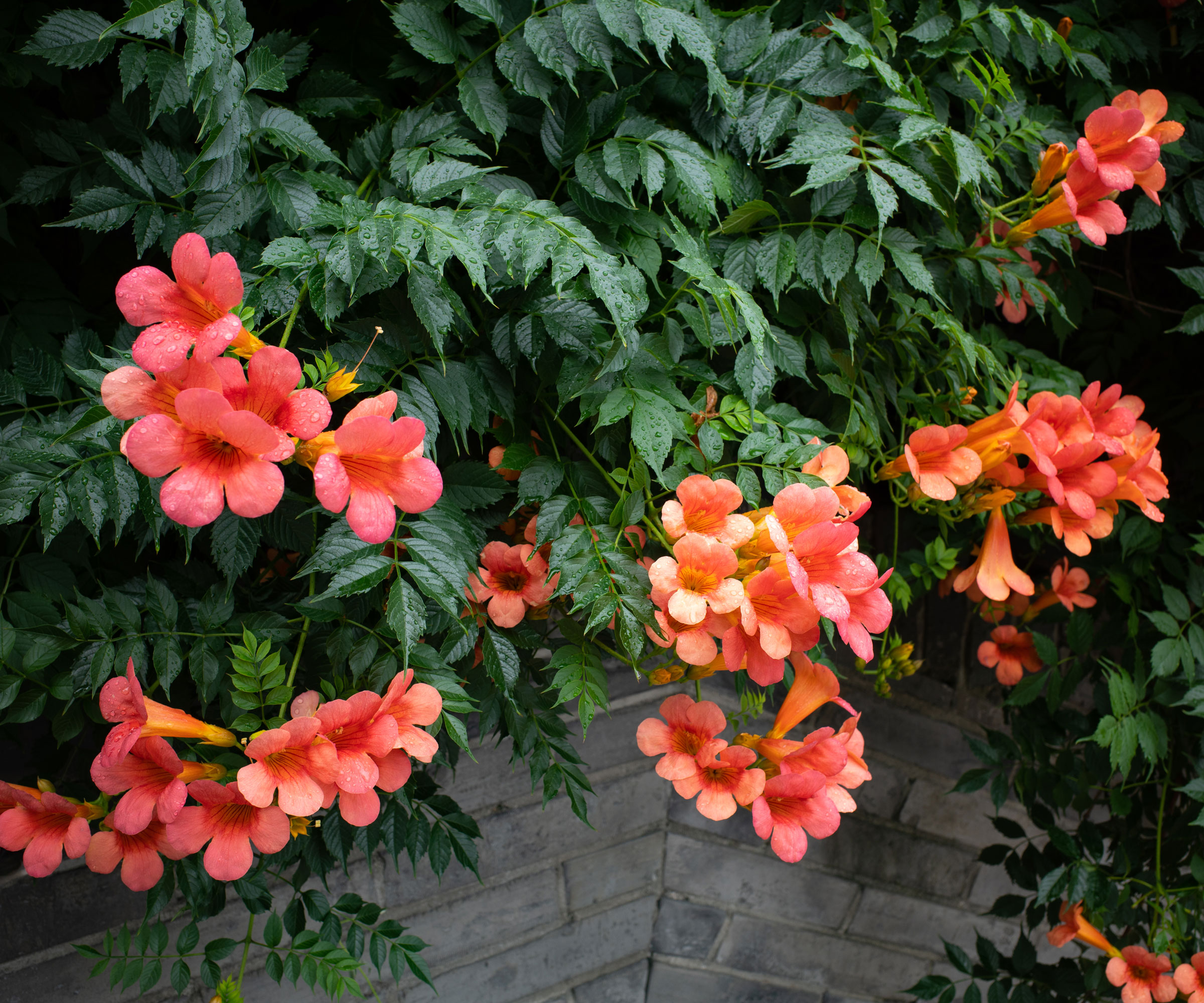
Trumpet flowers can bloom from spring to fall, depending on the variety
To maintain a trumpet vine's health, it's vital to prune at the right time. Trimming can occur anytime after the plant has finished flowering in the fall. However, like many deciduous shrubs, the ideal window is in late winter or early spring, based on your climate and hardiness zone.
Pruning should happen just before new growth begins in the spring, ensuring that the risk of frost has passed to protect the cuts and the plant's well-being. During dormancy, visibility improves, allowing for more precise cuts.
Although late winter or early spring is best, you can safely remove any dead or damaged branches at any time without jeopardizing the plant's health.
Essential Tools for Pruning
Pruning a trumpet vine requires just a few simple tools. You'll need a pair of pruning shears and loppers for older branches. Ensure your tools are clean and sharp to facilitate smooth cuts that heal effectively and minimize disease spread.
A horticulturist suggests wearing gloves and long sleeves to protect against sap, which can irritate the skin.

A pair of quality pruning shears with lightweight aluminum handles and a hardened steel blade.
A pair of lightweight 24-inch bypass loppers with a cutting capacity of 1 inch, perfect for pruning shrubs and medium to large trees.
A pair of flexible, breathable gardening gloves that are tear-resistant and suitable for various gardening tasks.
Steps to Prune a Trumpet Vine
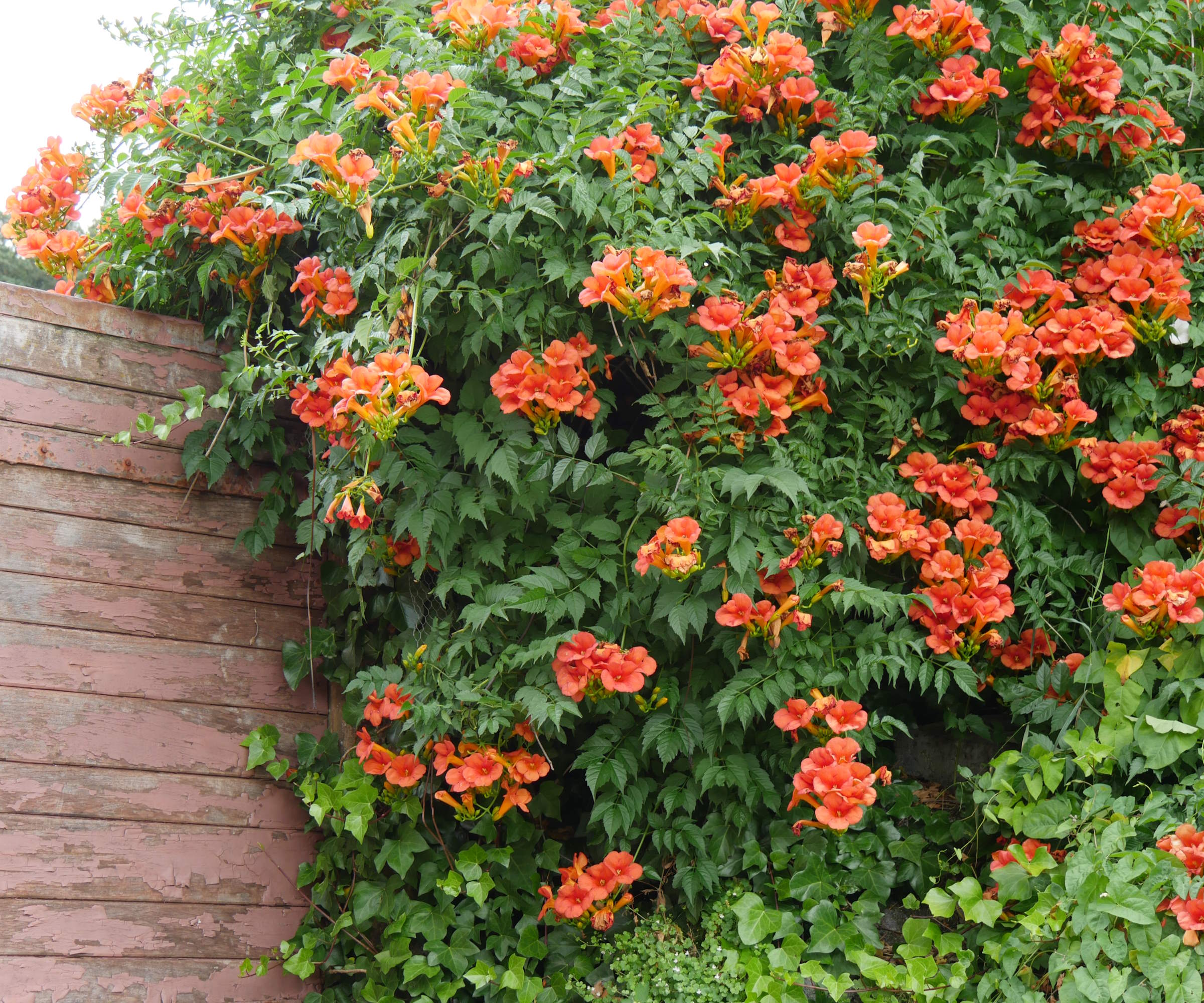
Trumpet vines can be pruned aggressively and will regrow
Trumpet vines are popular for covering walls and fences. These vines typically climb on trellises, arbors, or wire frameworks. It may take a few years for a newly planted vine to develop strong branches, and pruning begins once it's established after two to three years.
To keep your trumpet vine in check, focus on allowing a few strong shoots to grow while trimming off the others at the base. After establishment, annual pruning becomes routine.
During late winter or early spring, trim lateral branches from the main vines back to 2-3 buds. Trumpet vines can handle heavy pruning if overgrown. This aggressive approach can help maintain the plant's size, even in smaller spaces.
For rejuvenating older plants, cut back all growth to about 12 inches above ground level. New growth will emerge from the main trunk.
After hard pruning, allow new shoots to grow from the base, keeping two or three of the strongest and removing the rest. Additionally, be vigilant for suckers at ground level that should be removed annually.
Common Questions
Can I Prune a Trumpet Vine in Summer?
Summer pruning is generally not advised since the vine will be in bloom. Cutting during this time will eliminate the current season's growth that produces flowers. Trim in late winter or early spring before growth begins or in fall after flowering has concluded. The only exceptions for summer pruning are to remove dead or damaged wood and to deadhead flowers to prevent unwanted spread.
Now you should have a solid grasp of when and how to prune your trumpet vine. Add this task to your gardening checklist for late winter or early spring, ideally in February or March.



