Witch hazels are remarkable plants that bring life to winter gardens. When the landscape is drab, these trees and shrubs burst forth with striking, spider-like flowers in a variety of warm hues.
There are five main species of Hamamelis, along with numerous varieties worldwide. Among them, the Chinese witch hazel, Hamamelis mollis, and the Japanese witch hazel, Hamamelis japonica, represent the Asian varieties, while North America hosts three native species such as the American witch hazel, Hamamelis virginiana.
Whether you're a longtime admirer or just discovering witch hazels, this guide highlights some prime varieties to cultivate this year. From pinks and reds to yellows and oranges, these aromatic blossoms promise to enhance your garden.
Top Witch Hazel Varieties
While growing conditions can vary by variety, most witch hazels are cold-hardy, thriving in US hardiness zones 3 through 8. They generally prefer sunny spots but can tolerate partial shade, often found at woodland edges with rich, moist soil and ample sunlight. Regardless of whether you plant them in pots or borders, these five varieties will make a striking addition.
1. American Witch Hazel
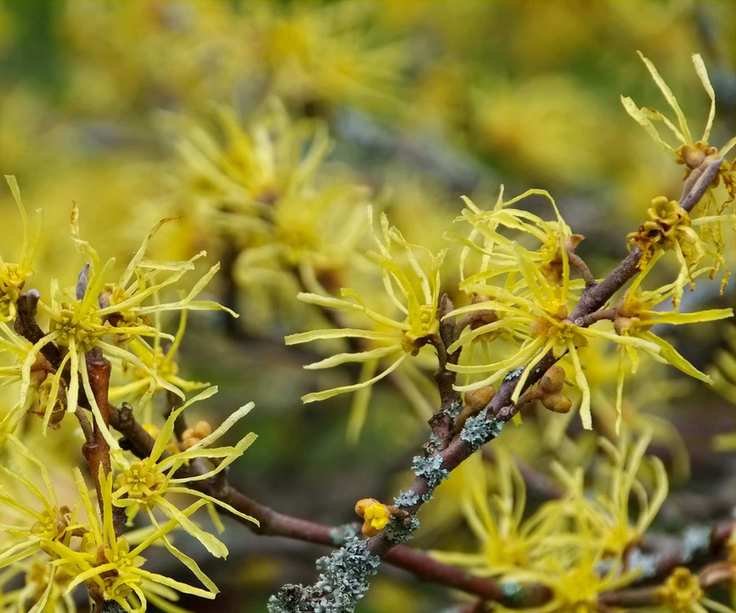
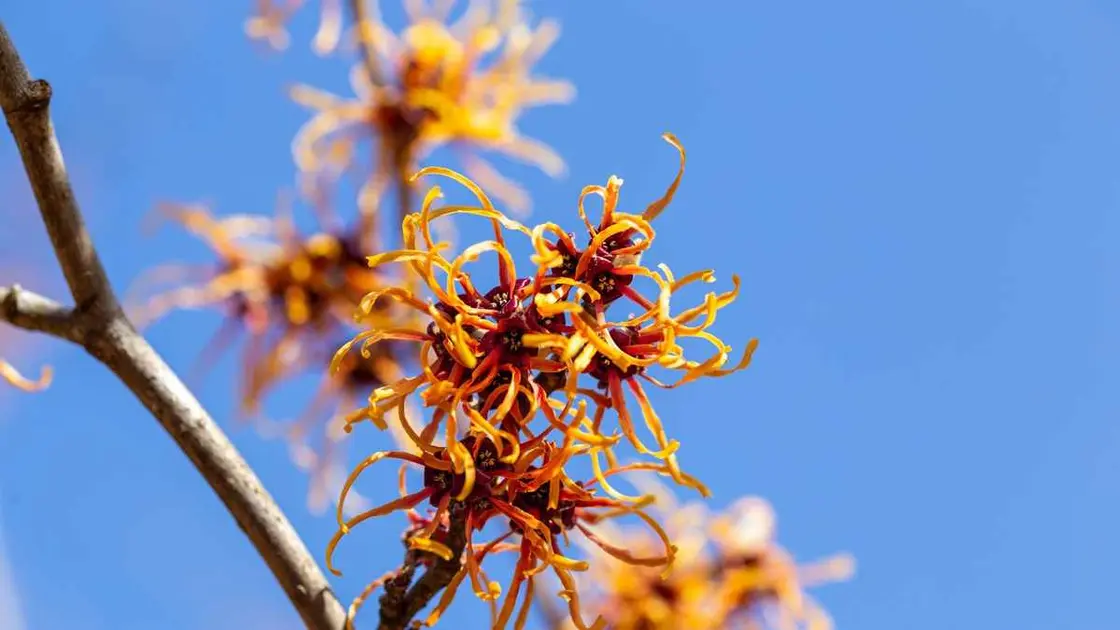
Hamamelis virginiana, known as the American witch hazel, is a native shrub that flourishes from zone 3 to zone 8. As depicted in the image, this species is celebrated for its vibrant yellow, spidery flowers that emit a citrusy fragrance, typically blooming in late fall and early winter.
This variety thrives in partial shade to full sun and adapts to most soil types. It can grow up to 20 feet tall over many years. Pruning should be minimal, as these trees look best when allowed to develop a natural shape.
You can find American witch hazel live plants at Walmart.
The American witch hazel, or Hamamelis virginiana, brightens pots and borders with its striking yellow blooms in winter.
2. Witch Hazel 'Diane'
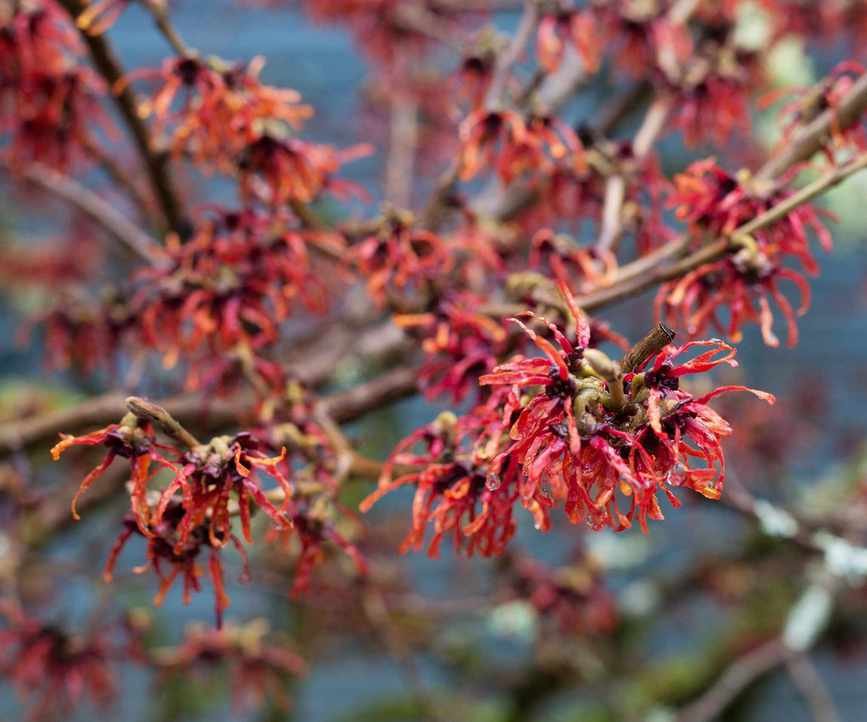
Hamamelis x intermedia 'Diane' is a hybrid renowned for its deep crimson flowers. Growing between 10 to 12 feet tall, these blooms appear from late winter to early spring, unfurling along healthy stems.
The vibrant color of these flowers is a rare find in winter gardens, making this plant a distinctive addition.
Thriving in US hardiness zones 5 to 8, it prefers well-drained soil and full sun to partial shade. In my experience as a gardener in South Wales, I've seen this hybrid flourish even with just two to four hours of daily sunlight.
With a gentle fragrance, place Hamamelis x intermedia 'Diane' near pathways or entrances to enjoy its scent throughout the chilly months of February and March. This tree also makes for an excellent container plant, just ensure to keep it watered during the spring and summer.
3. Vernal Witch Hazel
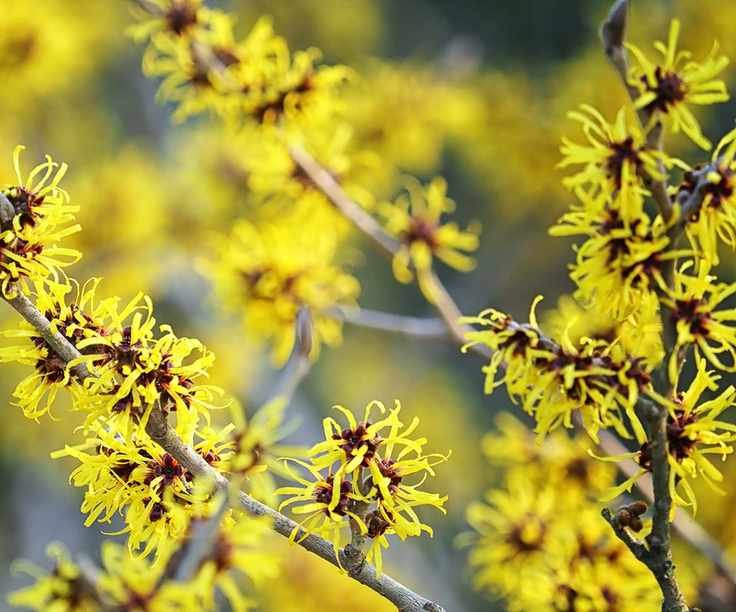
Hamamelis vernalis, also known as the Ozark or vernal witch hazel, is a compact tree suited for US hardiness zones 4 to 8. It produces yellow to orange flowers, often with red centers, blooming in late winter, heralding the arrival of spring.
Originating from the Ozark Mountains, this shrub is a perfect choice for smaller spaces, reaching a height of six to eight feet.
Like the other varieties mentioned, it tolerates some shade, but prefers part-shade. It is particularly adaptable to clay and high-pH soils, making it a great option for alkaline areas.
You can find vernal witch hazel live plants at Nature Hills.
4. Witch Hazel 'Jelena'
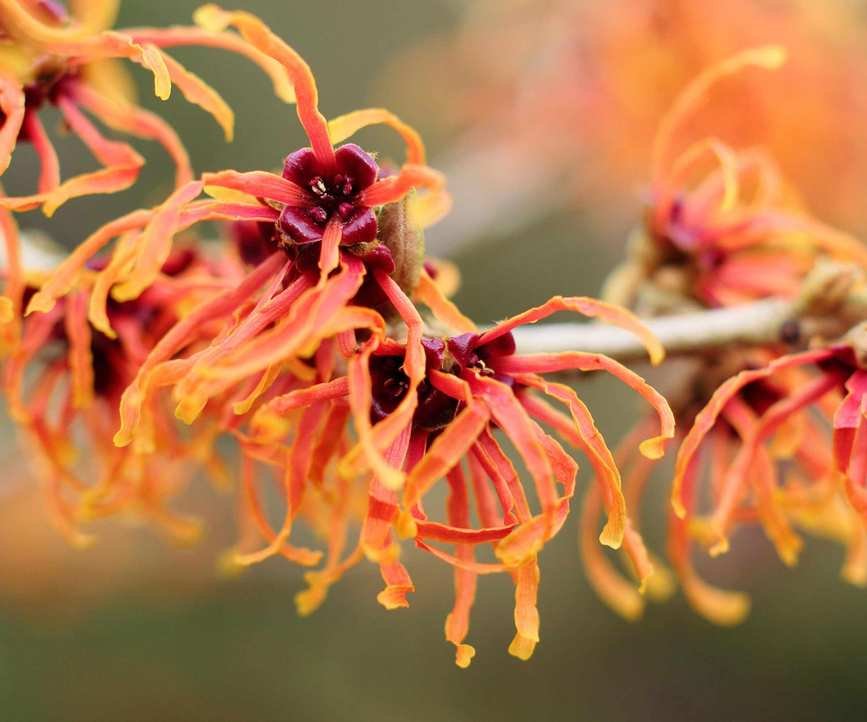
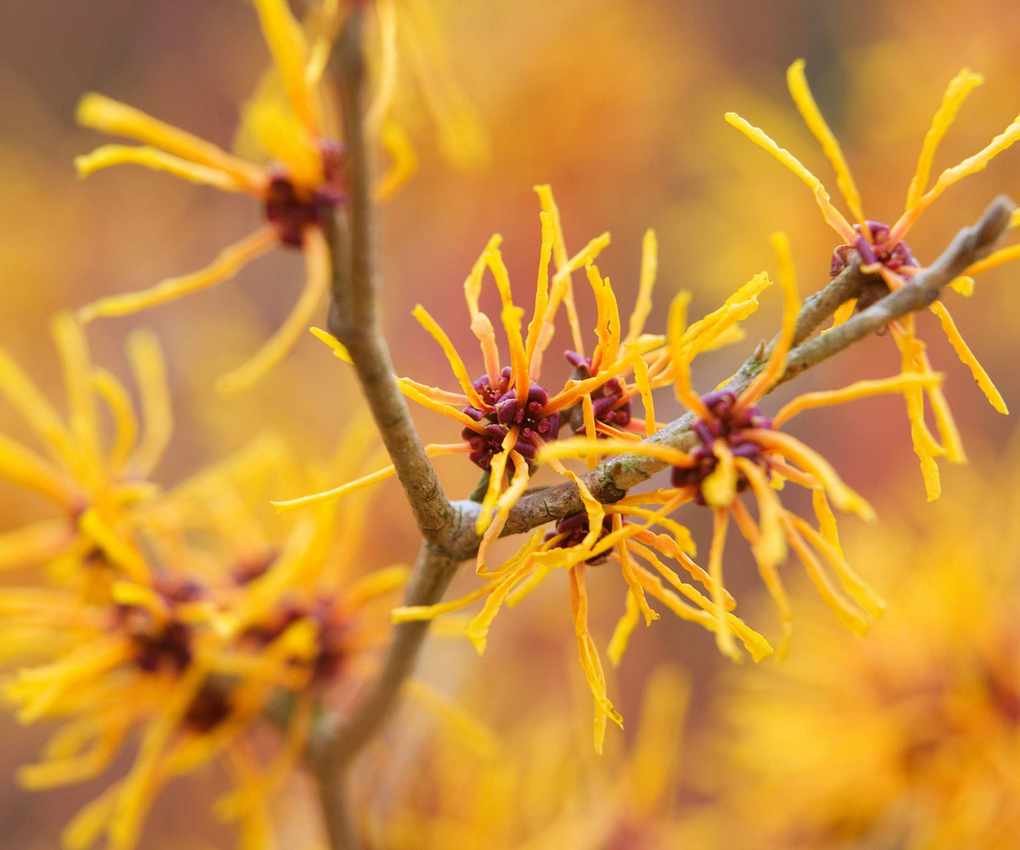
The hybrid Hamamelis x intermedia 'Jelena' is celebrated for its coppery-orange flowers. As one of the best statement trees, its blooms emerge in late winter, lasting into early spring, adding brightness to borders during the darker months.
Thriving in US hardiness zones 5 to 8, Hamamelis x intermedia 'Jelena' can grow up to 10 feet tall. A light pruning after flowering helps maintain a compact shape. Plant it in a sunny spot with well-draining soil for optimal growth.
5. Chinese Witch Hazel
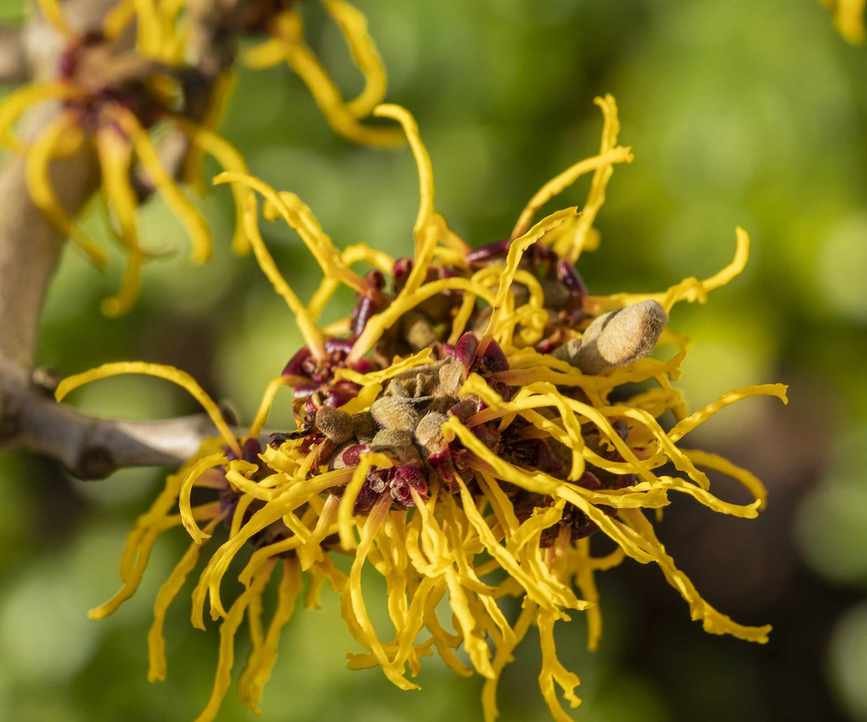
The Chinese witch hazel, or Hamamelis mollis, is an excellent low-maintenance tree for gardens in US hardiness zones 5 to 8. Known for its large, bright yellow flowers and strong fragrance, it blooms from late winter to early spring.
This species, native to China, has a rounded growth habit, reaching up to 15 feet tall. It flourishes in sunny, sheltered areas with well-drained, slightly acidic soil, ideally at a pH of 6.5 to 7.0.
Companion Plants for Witch Hazels
Witch hazels pair beautifully with daffodils, their blooms complementing the white and yellow bulbs for a stunning winter-spring display. They also attract early pollinators with their nectar-rich flowers.
Consider pairing them with fragrant evergreens to maintain scent in your borders after the witch hazel blooms fade. In sunny gardens, myrtle works well, while juniper is a solid choice for shaded areas.
Witch hazels require minimal fertilization, but mulching in the fall is beneficial. Use pine bark mulch from Walmart to enhance your borders.
For additional inspiration, check out our selections of native dogwood trees to plant alongside witch hazels. Dogwoods bloom from late spring to summer, ensuring your garden stays vibrant throughout the year. If you favor pink, consider the flowering dogwood, or Cornus florida, with live plants available at Amazon.