

As outdoor air-drying becomes impractical during the colder months, relying on your dryer can lead to higher energy bills.
Energy specialists reveal a hidden sensor setting that could reduce your energy costs by approximately $50 each year, simply by pressing a button.
Here's what you need to know about saving energy while doing laundry.
Using the Sensor Dry Feature on Your Dryer Can Lead to $50 Savings Annually
When it comes to quickly drying clothes, many people turn to their tumble dryer, especially during winter. Unfortunately, these appliances can significantly increase your energy costs since they're among the priciest to operate.
According to Josh Mitchell, an energy and HVAC expert, 'A standard vented dryer consumes about three to five kilowatt-hours per load. If you do five loads weekly, that adds up to 780 to 1,300 kWh each year. With an average electricity cost of 15 cents per kilowatt-hour, running a typical dryer could cost between $115 and $195 annually.'
However, experts indicate that the 'sensor dry' feature found in many dryers can help households save money while also improving clothing care.
'Most modern dryers come equipped with a 'sensor dry' option,' they explain. 'This function detects when your laundry is dry and automatically shuts off the machine, preventing over-drying, a common issue that wastes energy and damages fabrics. It can reduce drying costs by up to 20%.'
Josh notes that this is particularly beneficial for mixed loads, which can be a smart way to lessen laundry tasks, as lighter fabrics may continue tumbling long after they are dry.
'Using sensor dry can reduce drying time by 20 to 30%, depending on the load type and sensor accuracy,' he adds. 'This typically results in savings of around $30 to $50 annually, or even more if your dryer runs hot, or if you do laundry more frequently.'
'I've observed newer sensor-equipped models complete full cycles in 35 to 45 minutes, compared to older versions that often require 60 minutes or more.'
Even though the savings might seem modest, they accumulate over winter. 'And since this feature is built-in, it's a free way to save,' the experts advise.
Some dryers may automatically activate sensor drying, while others need you to select it manually. If you're unsure whether your dryer has this feature, consult the user manual or search for your model details online.
Another advantage of the sensor dry feature is its ability to decrease wear on heating elements, potentially reducing repair costs and extending your dryer's lifespan, allowing for longer use.
'Fewer heat cycles also reduce stress on internal components like thermostats, wiring, and bearings, which often fail in older dryers. Over time, this can lead to years of dependable operation before repairs are necessary.'
Experts also recommend maintaining your dryer by regularly cleaning lint filters to ensure optimal performance. Clogged filters require the dryer to work harder, increasing drying time. Cleaning after each use can help lower energy costs and enhance safety by mitigating common fire hazards in your home.

The sensor dry feature can lead to annual savings of $30 to $50.
For those looking to cut costs further, there are affordable alternatives to using a dryer, such as heated clothes airers like the tonchean Heated Clothes Drying Rack available on Amazon, which costs just a few cents to operate, especially when using covers to retain heat.
Employing your best dehumidifier can also expedite indoor drying by extracting moisture from the air, facilitating quicker drying while helping to combat mold and mildew.
Experts caution that drying clothes on radiators is one of the costliest methods, as it puts extra strain on your heating system. 'Heated airers or dehumidifiers are far more efficient and gentler on your home,' they note.
Recommended Products
Nisorpa Electric Heated Drying Rack
This drying rack is lightweight, foldable, and delivers consistent heating for rapid drying.
 Large capacity
ALROCKET Dehumidifier
This energy-efficient dehumidifier operates quietly and can extract up to 27 oz, or 800 ml, of water daily.
 Loved by many
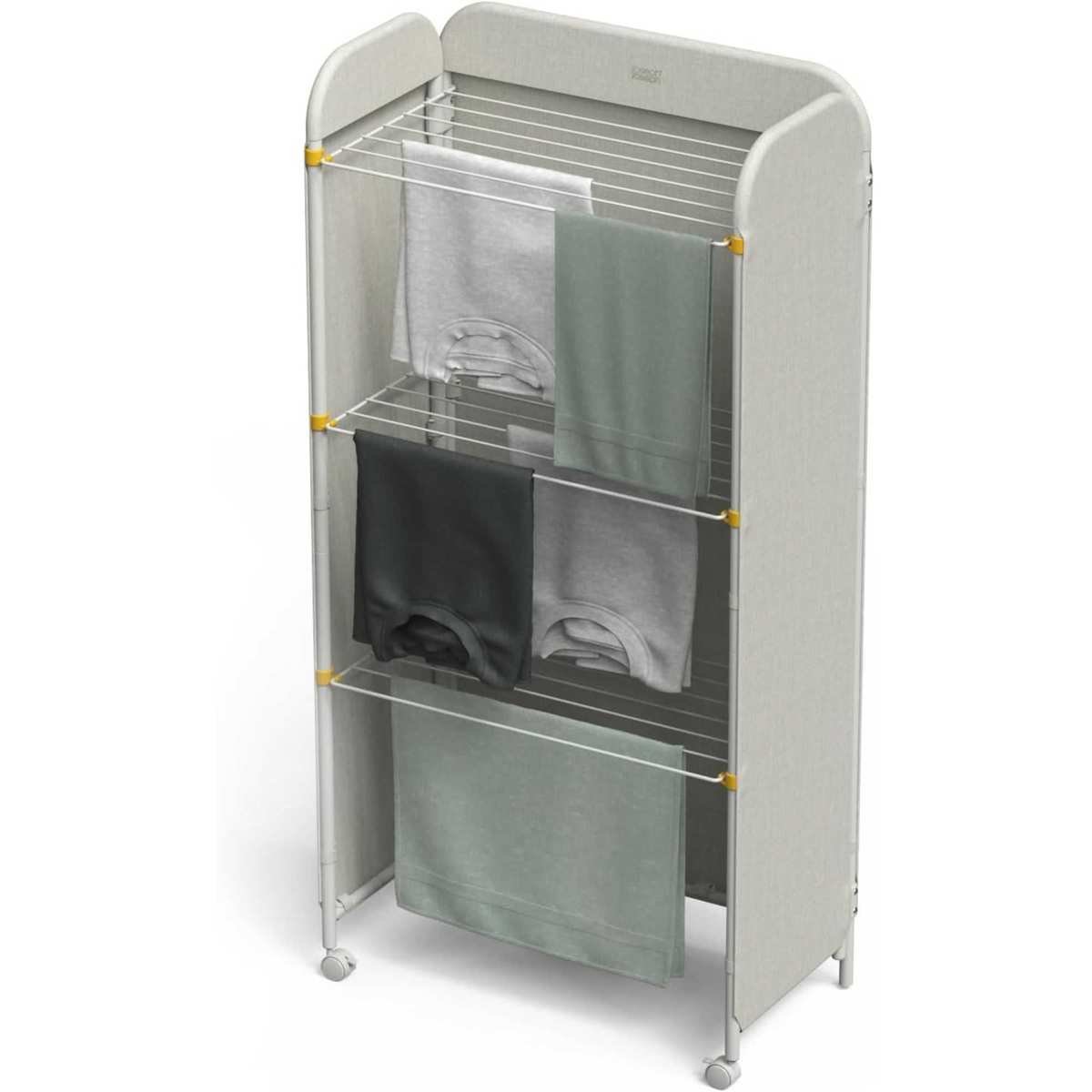
Joseph Joseph Eclipse 3-Tier Adjustable Laundry Drying Rack
This Joseph Joseph Eclipse indoor clothes airer is ideal for small spaces and discreetly hides hanging laundry.
 Speed up drying
Handy Laundry Wool Dryer Balls
These reusable dryer balls made from 100% New Zealand Wool help reduce wrinkles and cut down drying times.
 Folds flat
Amazon Basics Laundry Rack
This drying rack is available in two colors, crafted from rust-proof lightweight steel.
 Pack of four
Mainstays Plastic Dryer Balls
These plastic dryer balls minimize static and enhance air circulation during drying.
Expert Insight

Josh established his expertise in home heating, cooling, and air quality in 2014, building a dedicated team and website to serve readers with valuable insights.
'The sensor dry button is a minor adjustment that creates significant benefits,' the specialists highlight. 'It conserves energy, saves money, and prolongs your clothing's lifespan. In today's economy, such savings are invaluable.'
You can also dry clothes quickly without a dryer using a bed sheet to trap heat over your drying rack.



