
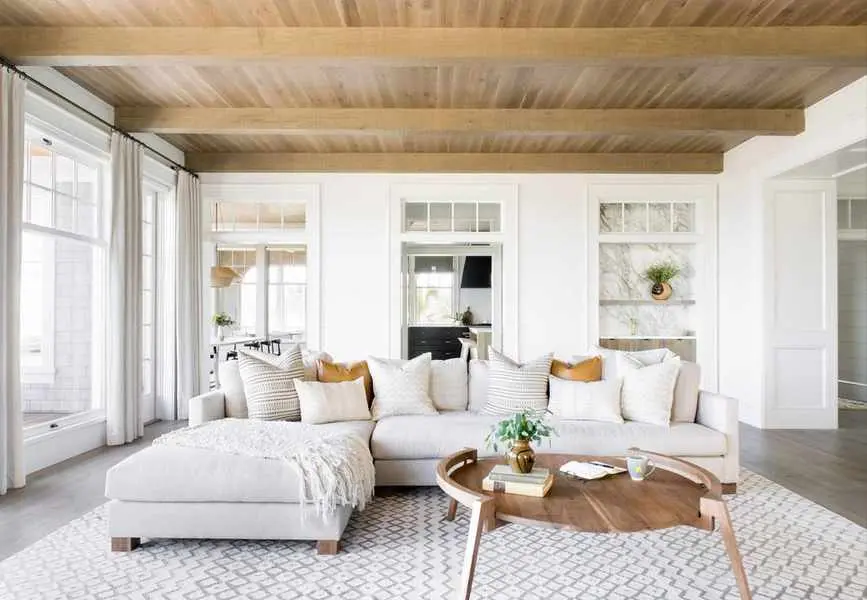
The golden ratio serves as a valuable guideline for crafting room designs from scratch or enhancing existing layouts. For those venturing into interior design, this formula can be instrumental in achieving balance and harmony in your spaces.
So, what exactly is the golden ratio, and how can it be applied in real-world settings? This concept, often referred to as the golden mean or golden number, has been utilized for over 2,500 years, represented mathematically as 1:1.618. It appears in various aspects of nature, from the proportions of the human body to the spirals of seashells, and is considered visually pleasing.
For practical application in design, we can simplify the complex ratio of 1:1.618 to an easier 40:60, making it more accessible for interior design purposes, as detailed below.
Understanding the Golden Ratio in Design
Martin Waller, the founder of global design firm Andrew Martin, explains: 'While symmetry is often discussed in interior design, there's another guideline that leading designers follow to create effortlessly beautiful schemes. The golden ratio, which is linked to the theory of thirds, is a natural principle that employs the Fibonacci sequence to illustrate why certain forms are aesthetically pleasing, such as the graceful curves of a fossil or the unfolding petals of a rose.'
'When applied to interior design, the golden ratio can facilitate the creation of a cohesive and inviting living space.'
'This principle can also be referred to as the 60/30/10 rule, which simplifies its practical application for each element of your room, including furniture scale, structural details, color schemes, and textural components.'
Applying the Golden Ratio in Interior Design
Let's break down the 1:1.618 or 40/60 formula for simplicity, and explore how to implement it effectively.
1. Using the Golden Ratio for Color Schemes
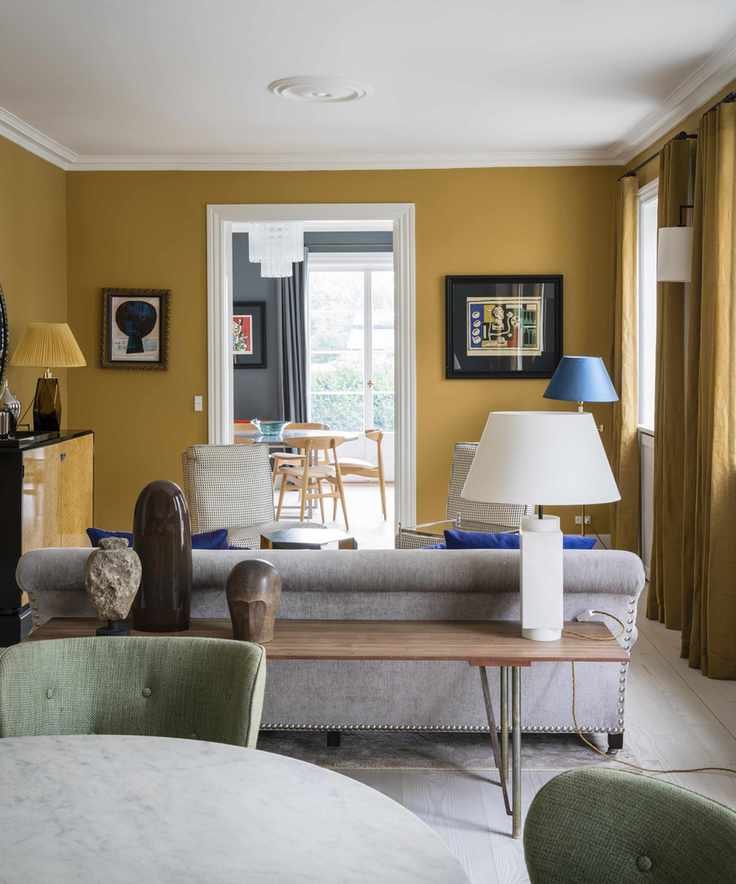
An effective room scheme should feature a balanced representation of colors, textures, and patterns.
In a two-color scheme, for instance, the dominant hue should comprise around 60% of the surfaces, while the secondary accent color would account for approximately 40%.
You can further refine this approach so that 60% represents the primary color, 30% for the secondary, and 10% for a third accent.
'Color is an excellent starting point for this theory,' notes Martin. 'Select three shades and distribute them according to these ratios: allocate 60% of your space to one color, likely through wall paint and larger furniture pieces.
'Choose a second shade to represent 30% through textiles like curtains and rugs.
'Lastly, use your third color in accents and accessories, making up 10% of the space to create a harmonious and thoughtfully designed appearance.'
2. Employing the Golden Ratio for Patterns
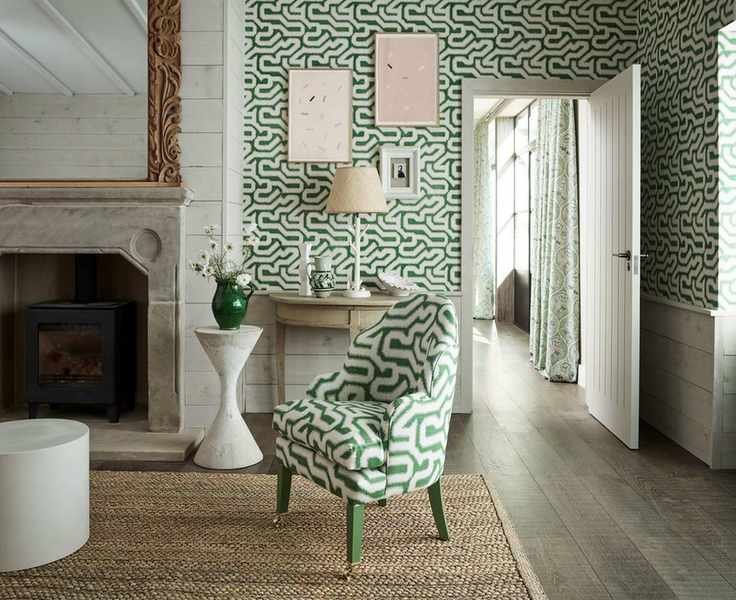
The golden ratio is particularly beneficial when incorporating patterns into a design. Suppose you desire a space featuring three complementary patterns but struggle to find the right balance. The same principles apply: the primary pattern should cover 60% of the patterned surfaces (like a sofa), while the secondary pattern accounts for 40% (such as cushions).
You can also adjust this to have 60% for a patterned wallpaper, 30% for a sofa fabric, and two patterns at 5% each for cushions. Mastering the art of mixing patterns can help you achieve the desired balance.
3. The Golden Ratio for a Balanced Room Layout
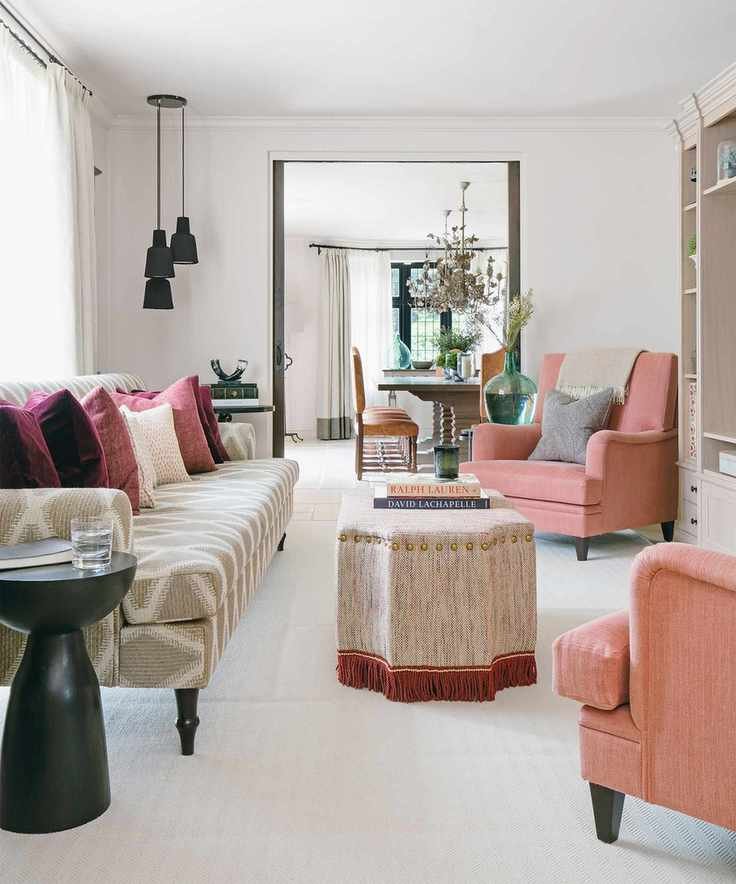
Have you ever encountered living room layouts that felt either too sparse or overcrowded? The golden ratio can assist in achieving the right balance.
By applying the 60/40 formula, measure the floor space and the area occupied by furniture. If the furniture exceeds 60% of the floor area, the room may feel over-furnished. Conversely, if it falls significantly below 60%, it might seem uninvitingly minimal. Strive for a layout that leaves 40% of the floor clear.
4. Selecting Furniture with the Golden Ratio
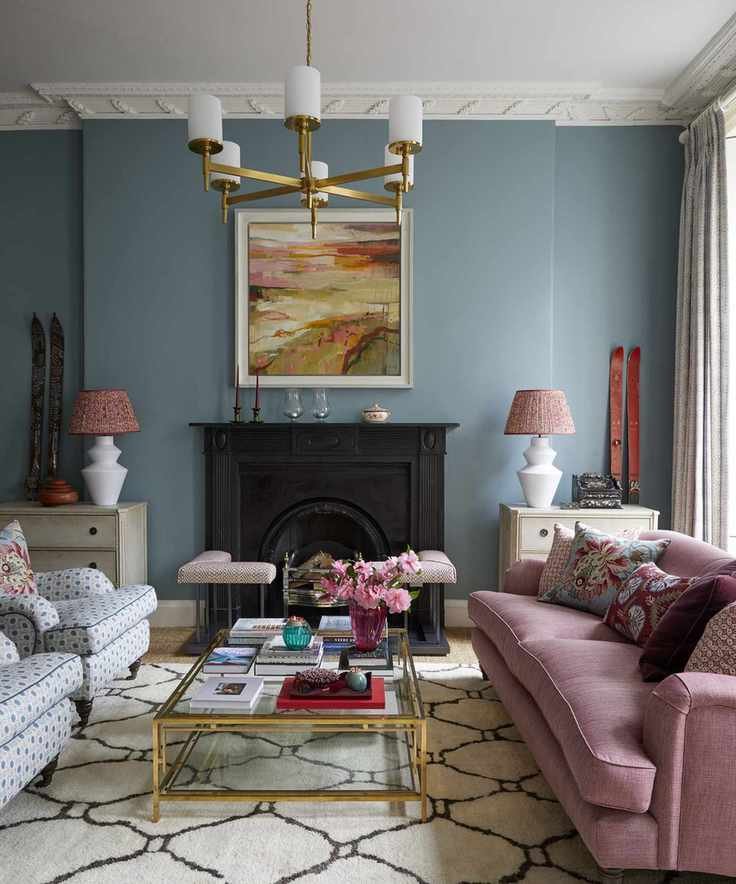
The balance between positive space (furnished) and negative space (unfurnished) discussed earlier will aid in selecting appropriately sized furniture. This allows you to choose a sofa or coffee table that fits not only the room's floor area but also aligns with other furniture items.
For a typical seating arrangement, like the one shown above, the sofas should occupy around 60% of the space, while a smaller coffee table should account for roughly 40%. When selecting a sofa, look for a coffee table that is about two-thirds of its length for a balanced appearance. A table that is too large will overpower the space, while one that is too small will feel misplaced.
5. The Golden Ratio for Accessory Display
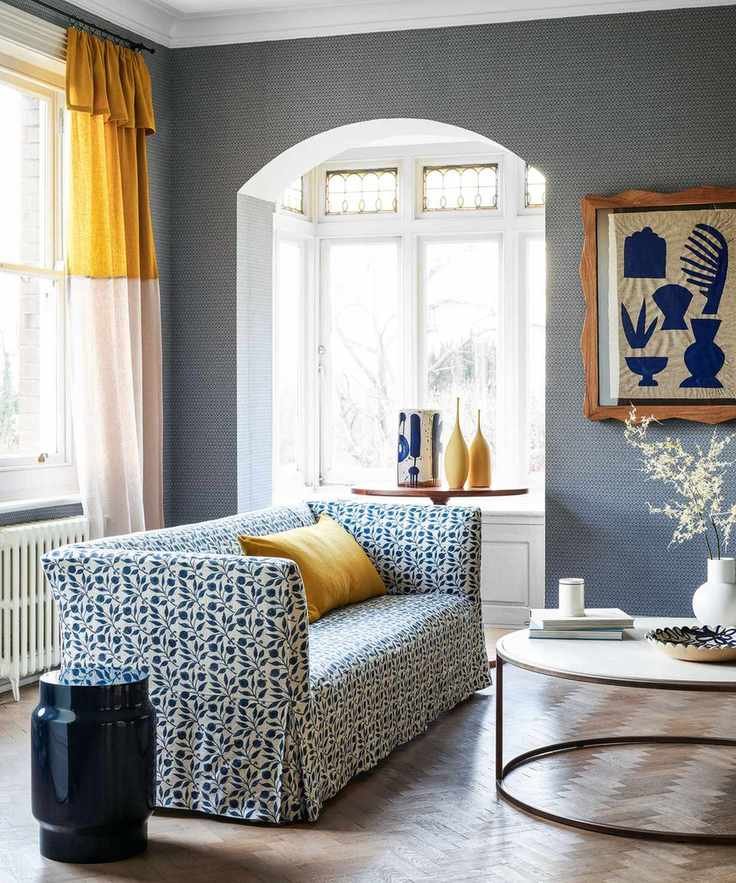
Consider styling your coffee table as an example of how to apply the golden ratio effectively. Ideally, the items displayed on the coffee table should occupy no more than 40% of the surface for a tidy look.
Similarly, cushions on a sofa should allow for 60% of the seating area to remain clear. If you wish to furnish shelves with books and decorative objects, allocate 60% for the books and 40% for showcasing your favorite items to achieve a well-balanced display.
6. Using the Golden Ratio for Art Placement

When deciding which art pieces to display, consider the golden ratio to achieve the ideal proportions.
Invest in artwork that is either one-third or two-thirds the size of the wall space for optimal balance. If you prefer large statement pieces, aim for the latter.
'You can also use the golden ratio for determining the height at which to hang your pictures,' advises Editor in Chief Lucy Searle. Art should be positioned closer to the furniture beneath than the ceiling above – think 40% of the wall space remaining blank below and 60% above.
What is the Golden Ratio of a Room?
The golden ratio of a room pertains to its proportions, including height, width, and length, which are often considered for achieving visual balance and acoustic harmony. Ideally, a room should be 1.6 times wider and 2.6 times longer than its height for optimal proportions... though achieving this is not always practical. However, great room proportions often evoke an instinctive sense of balance upon entering the space.



