
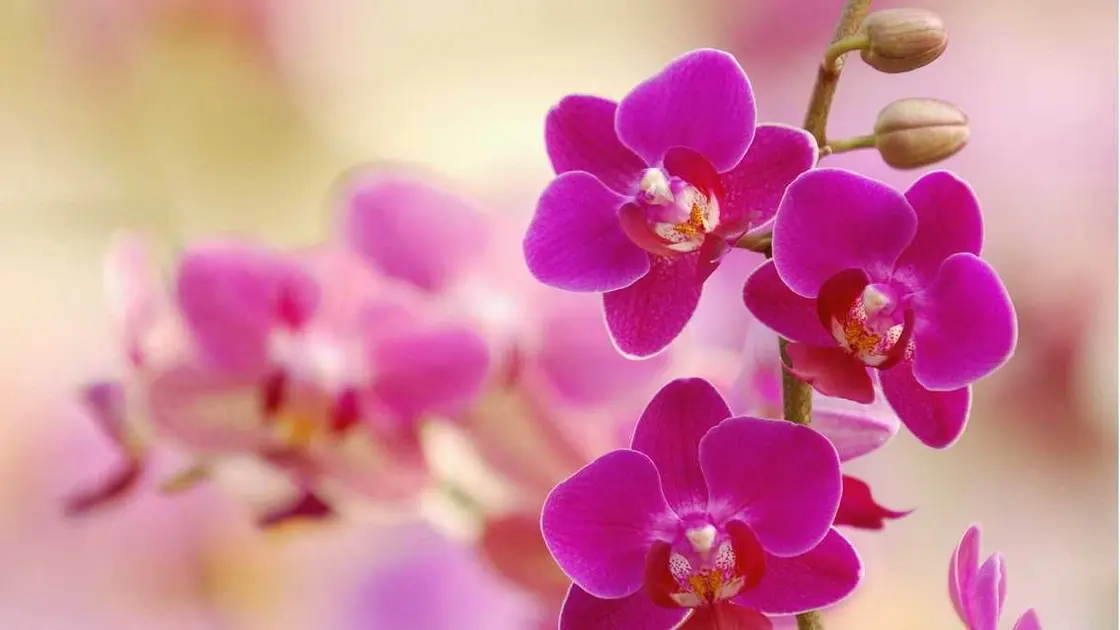
Orchids make stunning houseplants and are known for their beautiful, long-lasting blooms. Caring for these plants indoors involves several essential steps to ensure they thrive.
Moth orchids, or Phalaenopsis, are especially loved for their graceful stems, attractive leaves, and exquisite flowers. In nature, orchids are epiphytes, which means they grow on other plants and rely on their aerial roots for moisture and nutrients instead of soil.
For proper growth, it's best to use a potting medium like bark that allows for excellent drainage, preventing root rot. You can find suitable orchid potting mix available online, such as this mix from Greendigs.
Aerial roots can grow quite vigorously above the potting medium. While some orchid enthusiasts appreciate this look, others may opt to transfer their orchids to a larger pot to accommodate these roots. We gathered expert advice on the best way to do just that.
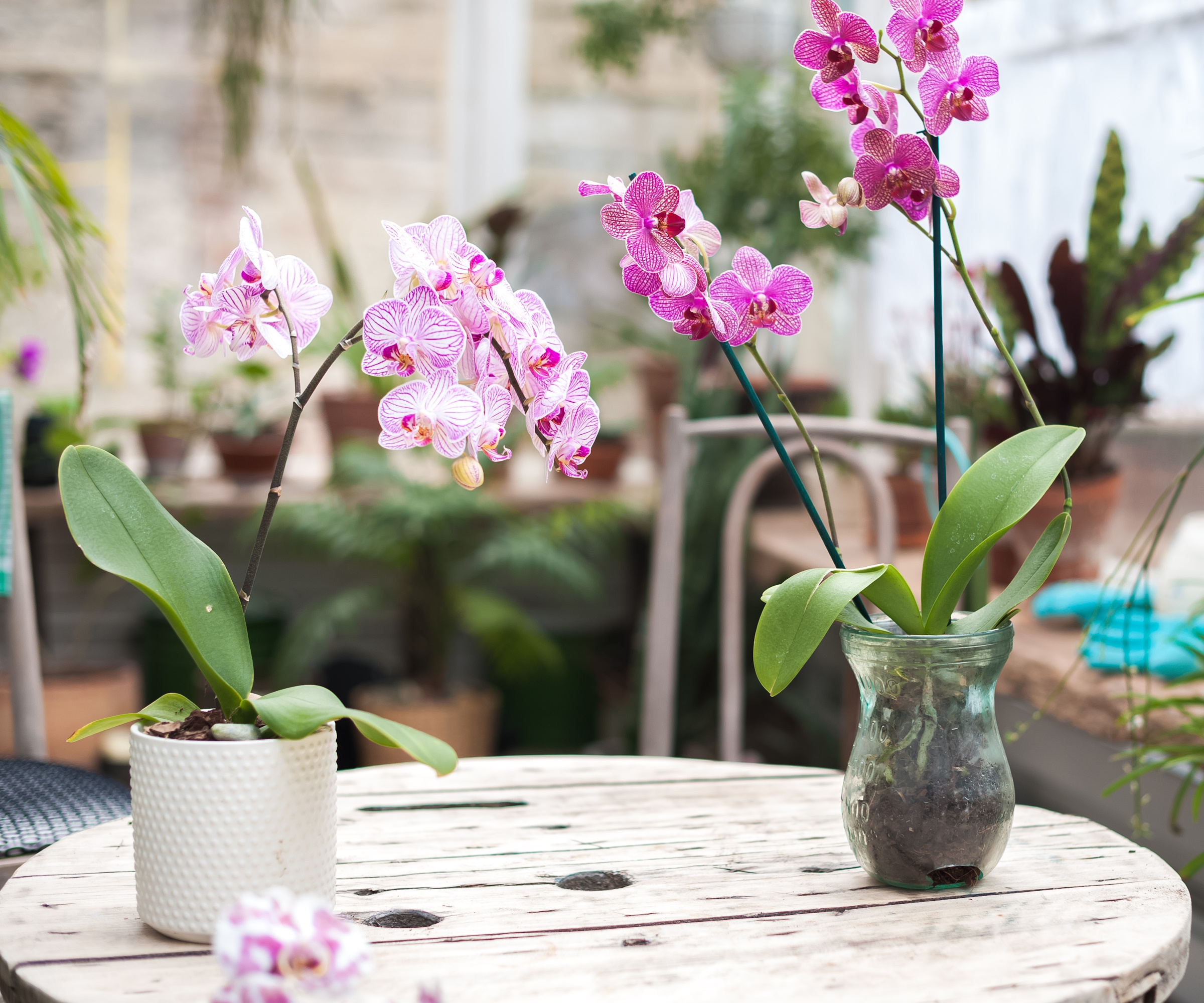
5 Steps to Repot Your Orchid's Aerial Roots
Working with aerial roots might feel overwhelming, but we have expert tips to help you manage those long, twisting roots during the repotting process.
Vladan Nikolic, a houseplant expert, suggests a few essential items for repotting:
- A new pot with drainage holes
- Bark or sphagnum moss
- Scissors or pruning shears
- Rubbing alcohol

1. Gently Remove the Orchid from Its Pot
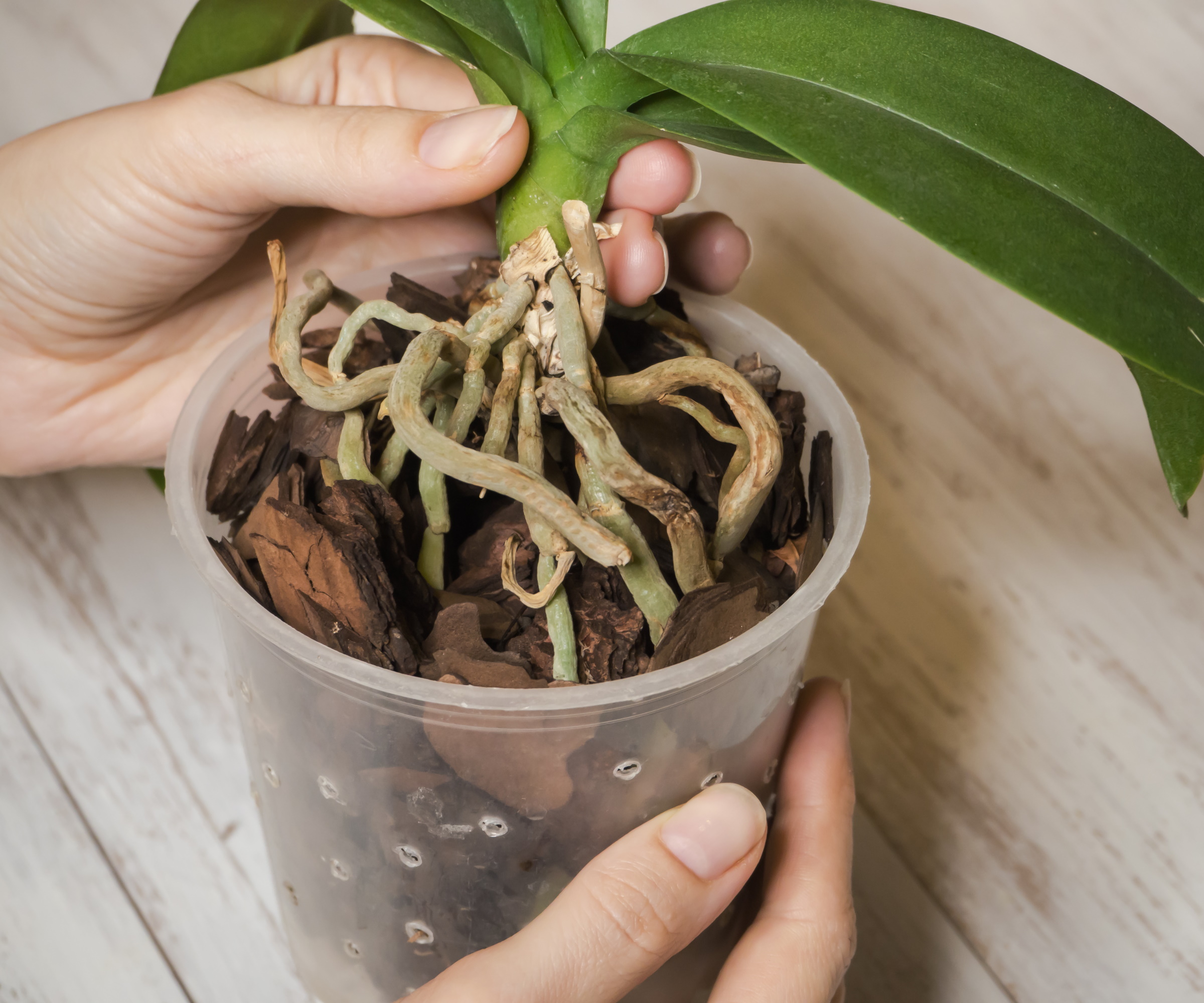
Start by carefully taking your orchid out of its current pot. Since aerial roots can grow in various directions, be gentle to avoid damaging them.
If the roots are tightly bound, shake the pot and lightly tap the sides. Use a spoon or fork to create space between the potting material and the walls of the pot, as recommended by Carmela de Castro, owner of a luxury florist in California.
Once removed, discard the old potting medium. You could repurpose it to create compost.

2. Remove Any Dead Roots

With the orchid out of its pot, it's time to trim away any dead roots. Using sterilized scissors or pruning shears, remove any soft or discolored roots.
Vladan Nikolic notes that you may find it easy to peel away the outer layer of roots, leaving the central part intact, which indicates that the root is dead.
Orchids typically don't have extensive root systems, so it's best to leave all healthy roots untouched. Healthy roots should be firm and display colors like white, gray, or green.
3. Prepare the New Pot with Fresh Potting Medium
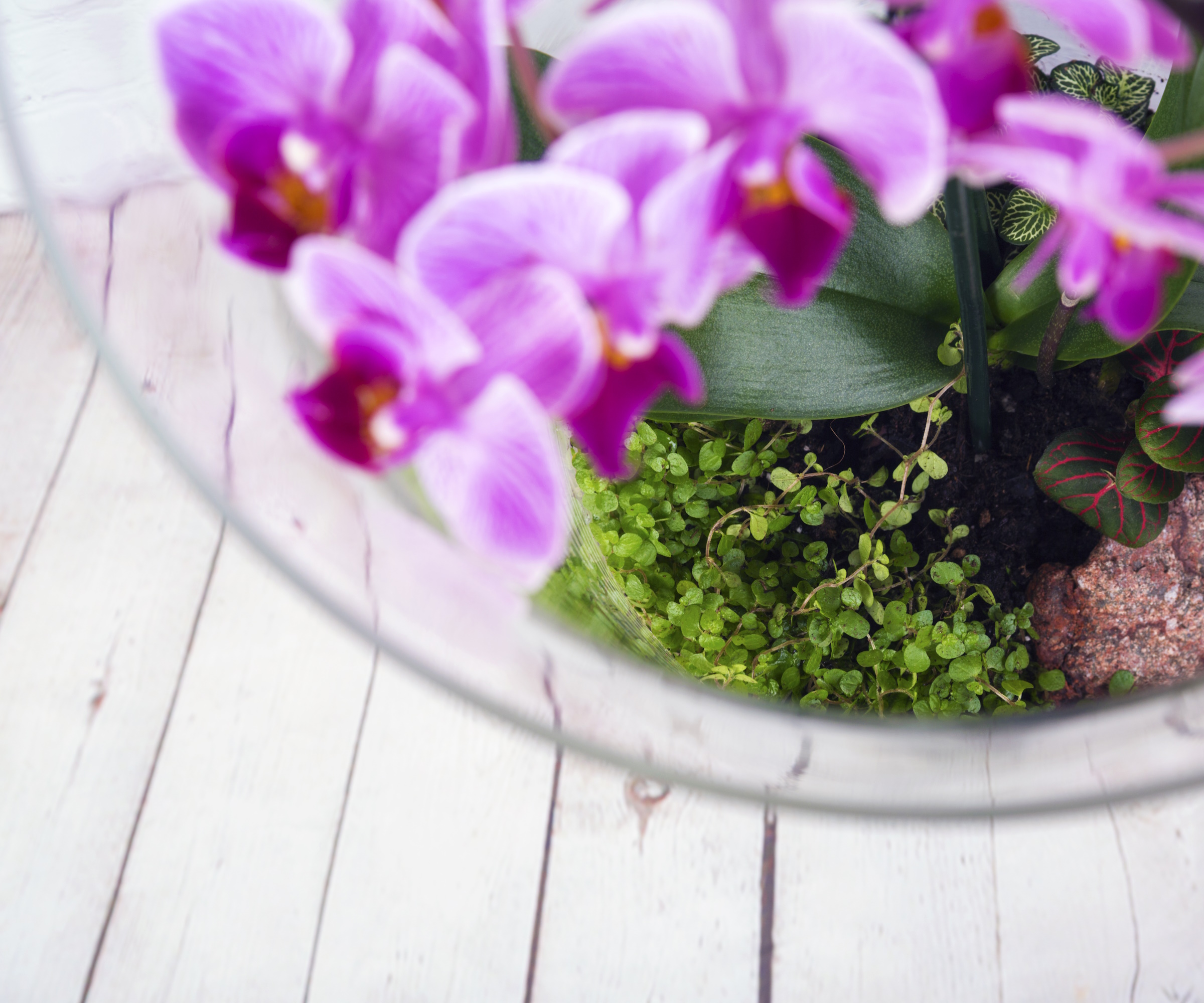
Choose a larger pot for repotting to provide ample space for root growth. Ensure it features drainage holes, such as these clear orchid pots from Amazon.
Vladan recommends clear plastic pots since they allow you to easily monitor the health of the root system.
As you fill the new pot with fresh potting medium, keep the orchid about an inch above the bottom. This ensures the roots settle properly among the new mix.
4. Position the Aerial Roots
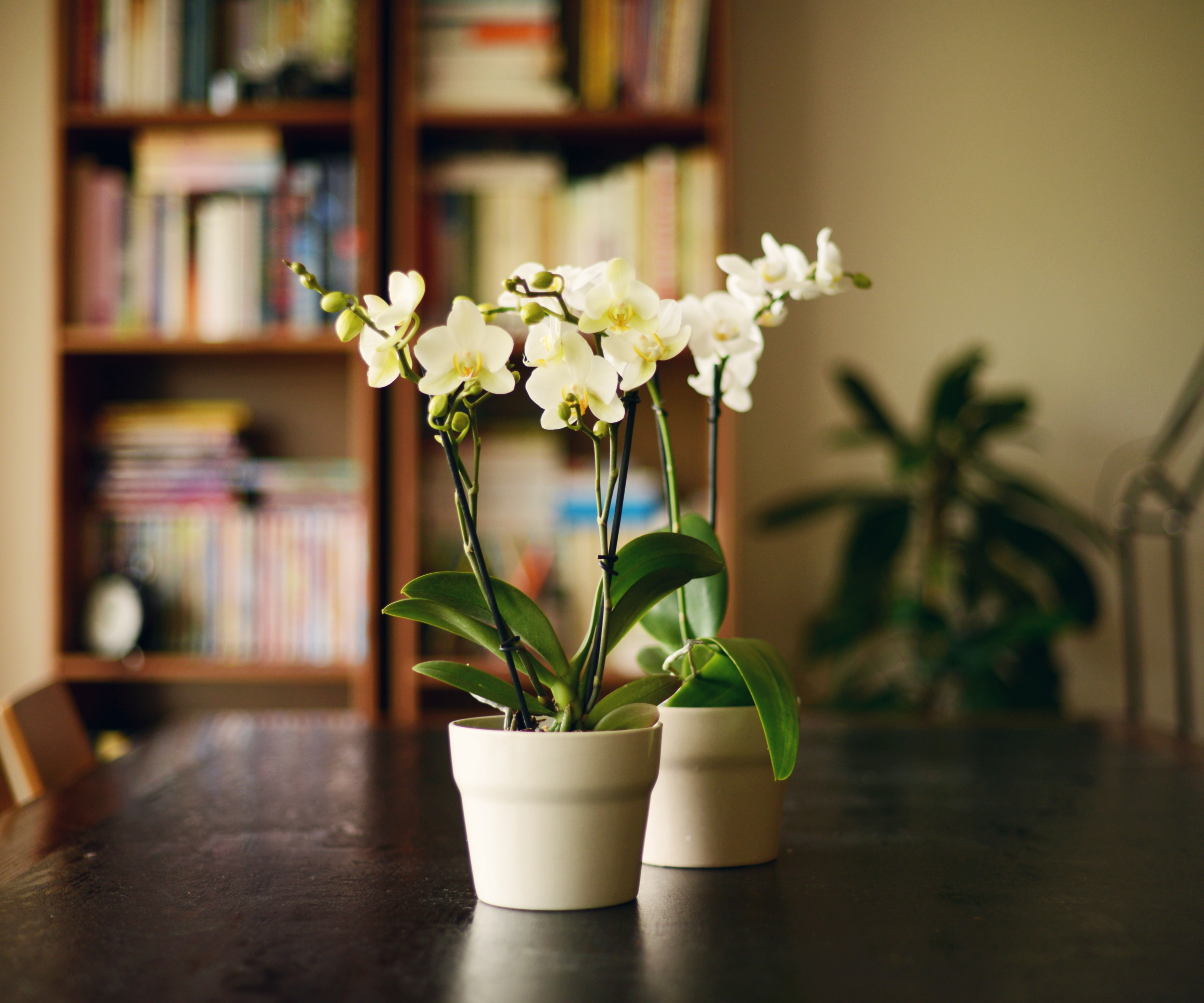
Gently guide the aerial roots into the new pot without breaking them. Fill the remaining space with potting medium, ensuring there are no gaps around the roots.
Vladan advises keeping the roots in contact with the bark or moss as much as possible. You can lightly tap the mix to secure the plant.
5. Water the Orchid's Aerial Roots Generously
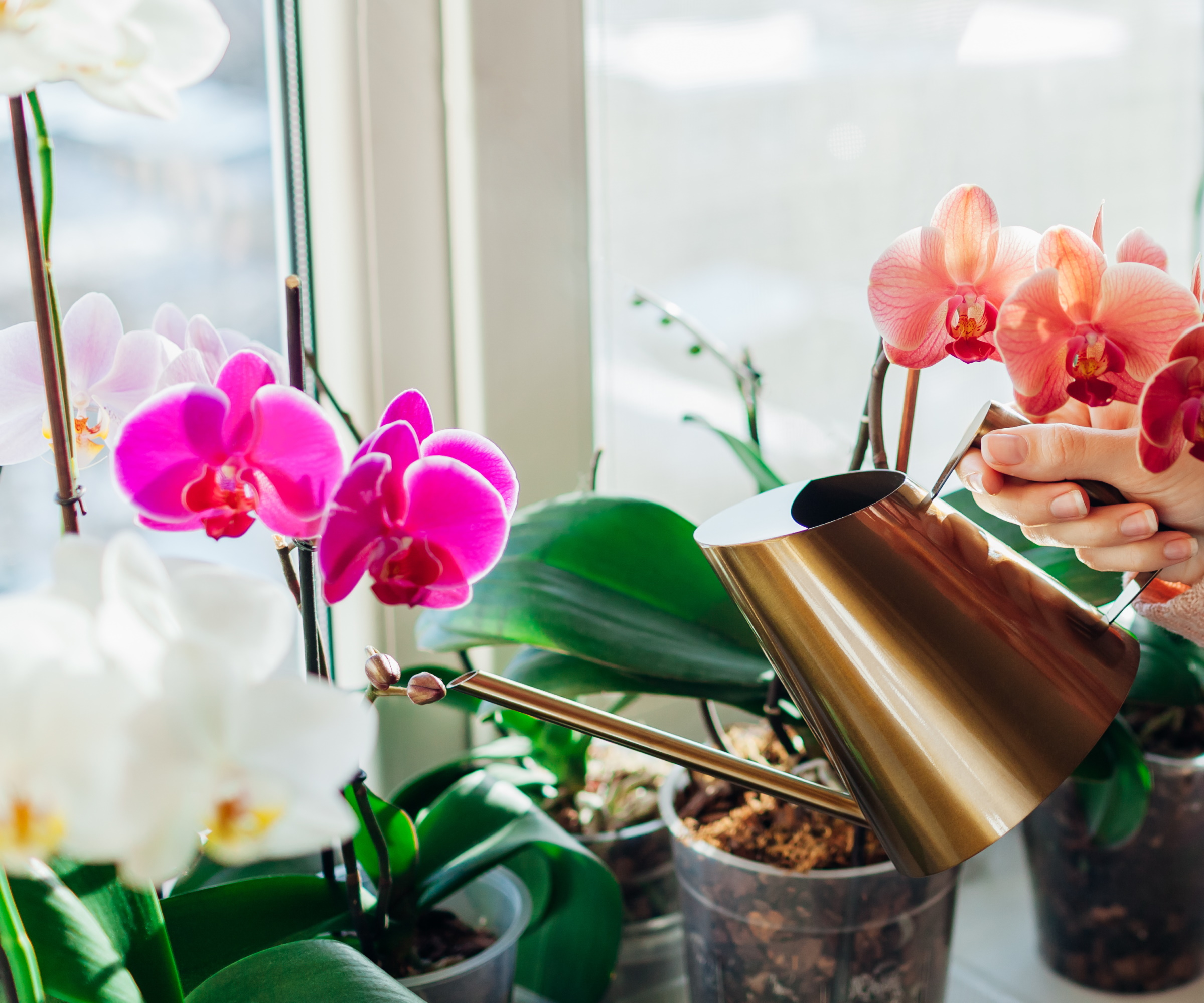
After placing your orchid in its new pot, it's crucial to water it thoroughly to help the roots adjust to their new environment.
Vladan suggests watering under a faucet, ensuring the pot drains well. If using bark, soak it for about 30 minutes.
Position the repotted orchid in a bright area, avoiding direct sunlight. A sunny windowsill will help keep the orchid healthy and foster growth.
Be cautious not to overwater your orchid in the future, as this can lead to wilting. When it comes to watering orchids, it's better to do so less frequently than you might believe.
Shop for Orchids Online
Large Phalaenopsis Orchid: Purple
An elegant purple moth orchid arrives in a white container, attached to a green support stake. It typically measures around 20-30 inches by 5 inches upon purchase.
White Phalaenopsis Orchid Garden
This features multiple stems with lovely white flowers, delivered in a white ceramic planter, measuring approximately 18-28 inches by 10 inches at the time of purchase.
Large Phalaenopsis Orchid: Blue
A striking blue moth orchid that comes in a white container with a green support stake. It usually measures around 20-30 inches by 5 inches when purchased.
FAQs
When should you consider repotting an orchid?
Repotting is advisable when the roots start to outgrow their pot, and it's also beneficial to do this every couple of years to prevent becoming pot-bound and to encourage new growth.
'Avoid repotting while the orchid is in bloom, as this can stress the plant and lead to bud drop,' advises Vladan Nikolic.
Can aerial roots be left to grow as they are?
'You don't have to repot orchids just because of exposed aerial roots. If the plant appears healthy, it likely means it's thriving in its current setup,' explains Carmela de Castro.
Leaving aerial roots outside the pot can lead to them drying out more quickly due to the lack of moisture from the potting medium.
'Ensure you water the aerial roots every time you water the orchid. Ideally, they should be watered more often than the potting mix,' advises Vladan Nikolic.
Which other indoor plants have aerial roots?
Aerial roots are also found on other houseplants that naturally grow on other plants. For instance, monsteras develop aerial roots because they are climbers in sub-tropical areas.
Regardless of the plant, it's essential to care for aerial roots, ensuring they receive enough moisture that they would normally derive from soil.
Orchids have aerial roots that can grow wildly if left unchecked. If you aim to tidy them up, take care to preserve healthy roots while removing the dead ones.



