Growing onions is a favorite hobby among vegetable gardeners worldwide. While it can be an easy endeavor, there are pitfalls that can jeopardize your crop and diminish your harvest.
Many of these challenges can be sidestepped by selecting suitable varieties, maintaining a consistent feeding and watering schedule, and providing adequate space for growth.
For those learning to cultivate onions, the eight common onion growing challenges outlined here shouldn't be intimidating. With some expert advice, you'll be equipped for success.

Onions are a delicious crop, but there are some common mistakes to avoid when growing them.
8 Common Onion Growing Issues
Onions come in various colors and shapes that aren't always available in stores. They are a staple in many kitchens and gardens. Although relatively simple to cultivate, certain issues often arise. Let's explore these frequent problems, their causes, and how to resolve them.
1. Choosing the Wrong Onion Type
There are numerous onion varieties categorized into short-day, intermediate, and long-day types, depending on the daylight hours they require for bulb formation. Selecting an unsuitable type for your USDA zone can lead to underwhelming results.
Bruce L Frasier, President of Dixondale Farms, emphasizes that selecting the incorrect variety is a primary concern for many growers.
He explains: 'Onions have specific daylength needs. Short-day varieties bulb when daylight hits 10-12 hours, intermediates at 12-14 hours, and long-day types require 14-16 hours.
'Planting a short-day type in the north yields small onions, while long-day types in the south produce large green tops without forming bulbs.'
When deciding which onions to plant, opt for varieties that thrive in your local conditions. Research your USDA zone or check with local farmers' markets for successful cultivars.
- Purchase onion seeds and sets from Burpee
- Get onion sets at Nature Hills
- Shop for onion sets at Walmart

Onions are categorized as short-day, intermediate, and long-day types.
2. Inadequate Feeding
For larger onions, proper fertilization is crucial. Fertilizer should be added at planting and throughout the growing season. Onions thrive on a balanced fertilizer containing nitrogen (N), phosphorus (P), and potassium (K), with nutrient ratios indicated on packaging.
Provide a balanced fertilizer at planting to establish a strong root system, followed by a high-nitrogen feed after about a month, repeated every three weeks. Hardier onion sets can be planted in fall and should receive a high-nitrogen fertilizer in spring. Products like Hi-yield Ammonium Sulfate from Walmart or Calcium Nitrate from Amazon are excellent choices.
Dominique Kline, Farm Manager at The Hope Farm, notes that onions are heavy feeders and require careful monitoring to determine when to cease fertilization.
'Onions behave more like leaf crops than root crops, needing high nitrogen for foliage growth that supports bulb development,' she explains. A 5-10-5 fertilizer ratio is recommended. Maintain a regular feeding schedule until bulbs start to gain size and the soil cracks at the base, signaling that no further feeding is needed.
Incorporating well-aged manure or homemade compost before planting enriches the soil with nutrients. Mulching around the plants also contributes nutrients as it decomposes. Even without fertilization, onions can still grow but will be smaller, so if you're questioning 'why didn't my onions grow bigger?' consider the feeding aspect.

Onions are nutrient-hungry and need feeding to produce large bulbs.
3. Excessive Watering
While onions require water to grow and develop bulbs, they predominantly need it during warm spells and droughts. Overwatering can lead to fungal and bacterial diseases. It doesn't take much excess water for onions to rot in the soil.
Julia Omelchenko, botany expert for NatureID, advises: 'Maintain soil that is moist but not waterlogged. Water frequently until bulbs are established, then reduce frequency. Increase watering during dry spells and decrease it in cooler weather.'
Onions should receive about an inch of water per square foot weekly, adjusted for rainfall. Many growers prefer drip irrigation to target water directly to the roots, minimizing leaf wetness. For container-grown onions, monitor soil moisture closely as pots can dry out quickly.
Cease watering by mid-summer, around four weeks before harvesting when bulbs swell and leaves yellow. Continuing to water past this point can shorten bulb storage life.
Correct watering is crucial for healthy onion crops.
4. Bolting
Bolting occurs when onions experience stress, prompting them to send up a flower stalk as they attempt to seed. Factors like high temperatures, drought, or unexpected cold can trigger bolting. A bolting onion shifts focus from bulb development to flowering, resulting in smaller bulbs.
However, if your onions do bolt, there's still hope for a harvest. Be cautious, though; bolted onions don't store well.
Jen McDonald, an organic gardener and co-founder of Garden Girls, suggests: 'Remove the flower stalk and either leave the onion in the ground for a few weeks or harvest it. You can also collect seeds for the next year.' While bolted onions are edible and can remain in the ground for a month, it's best to consume them promptly.
To prevent bolting, consider buying bolt-resistant varieties. Onions grown from seed tend to bolt less than sets. Dominique Kline stresses that prevention is key: regularly water during hot weather and monitor weather conditions to minimize stress. Use coverings during cold snaps and mist plants during heat waves to reduce temperature fluctuations.

Bolting often happens during hot, dry spells.
5. Planting Too Deep
Planting onions too deep can hinder bulb growth or prevent bulbing altogether. A good rule of thumb is to plant onion sets two inches deep, with just the tip exposed. The tip should always face upward when planting.
If starting from seed, transplant seedlings when they reach 6-8 inches with three leaves at a depth of 1-1.5 inches.
Deep planting can lead to poor bulb formation, resulting in small, oval-shaped bulbs. Additionally, deep-set bulbs may remain hidden when bulbing begins, increasing the risk of rot in cold, wet soil.

Onion sets can be easily planted – always position them pointy end up.
6. Planting Too Close Together
Overcrowding can also cause issues for onions. If you suspect your plants are too close, thin them out to reduce competition for sunlight, water, and nutrients. This will allow bulbs the space they need to grow to their full potential.
Dominique Kline recommends spacing plants six inches apart and maintaining twelve inches between rows for optimal growth. Overcrowding can hinder nutrient absorption and sunlight exposure, leading to a less productive harvest.

Onion sets are easy to plant – always place them pointy end up.
7. Onion White Rot
Onion white rot is a fungal disease affecting all alliums, including garlic and leeks, and is a prevalent issue among onion growers. Unfortunately, it is untreatable, necessitating the removal of affected onions.
Julia Omelchenko explains that this fungus, Stromatinia cepivorum, can infect crops both in the ground and in storage.
'Symptoms include yellowing foliage, watery spots at the stem base, and fluffy white mycelium on the damaged areas and roots,' says Julia.
To avoid the disease, use healthy seeds and practice crop rotation. Do not plant onions in the same area for more than two consecutive years.
Effective crop rotation is essential, as the fungus can linger in the soil for years. Avoid planting allium crops in the same spot for more than one year.
Jen McDonald adds that overwatering can contribute to the disease by creating conditions favorable for fungal growth. Manage your irrigation carefully, and if leaves begin to yellow, this may indicate overwatering.

The fungus causing white rot can persist in the soil for years.
8. Bulbs Emerging Too Early
Sometimes, onion bulbs may pop up earlier than anticipated, raising concerns about reaching harvest time. Early bulb emergence is not necessarily negative; it indicates that the onion is maturing.
Jen McDonald reassures that early bulbs are 'not a bad thing' and advises leaving them as is. Covering them with soil can increase the chance of rot.

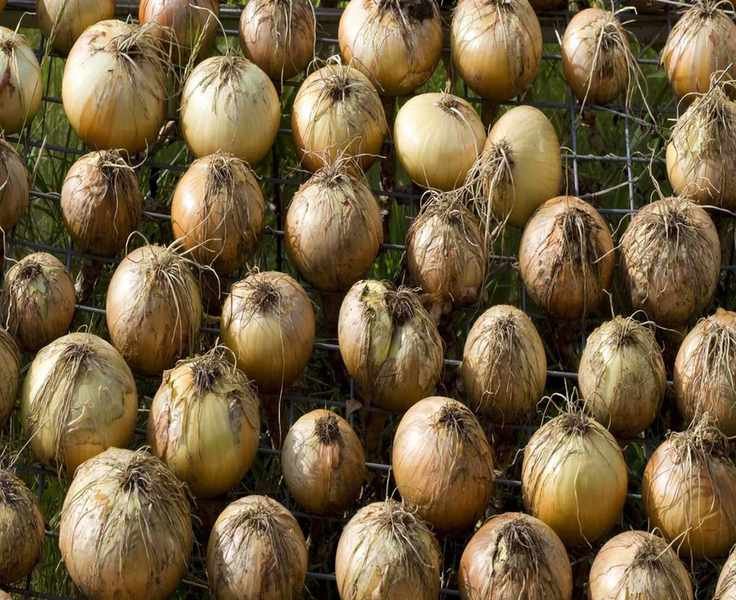
Onions are available in a variety of colors, including yellow, white, and red.
Onion growing problems can occur, but don't be discouraged. Overall, onions are a relatively straightforward crop to cultivate, offering a multitude of colors, shapes, and flavors that surpass what's available in stores. My experience has shown onions to be one of the more satisfying vegetables to grow. While challenges may arise, many are easily preventable, and even if they do occur, it doesn't have to be the end of your crop.