
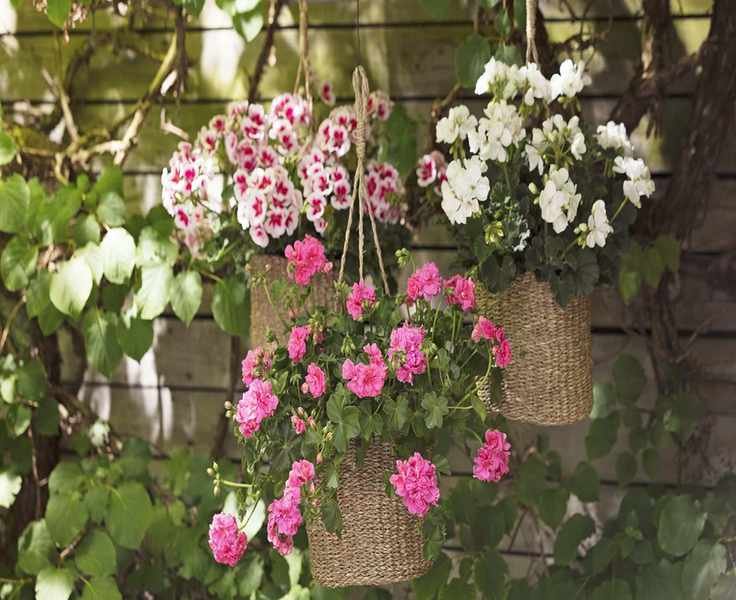
Regularly deadheading geraniums is crucial for prolonging their blooms. This straightforward task can be done easily by hand—just snap off wilted flowers with a gentle touch.
In the sections below, we'll explain the best way to deadhead geraniums and address the issue of yellowing leaves, keeping your plants healthy until you overwinter them for next season.
Steps to Deadhead Geraniums

To deadhead, trace the stem of the faded flower down to where it connects with the main stem. Gently grip the main stem with one hand and push your finger down on the spent stem at the leaf nodes above. It should detach effortlessly.
Be sure to remove the entire flower stem to prevent the plant from wasting energy on it, allowing it to focus on producing new blooms.
After deadheading, dispose of the spent blooms in the compost, unless they show signs of disease or pests.
Where to Pinch Off Geraniums
Pinch off geraniums where the flower stem meets the plant's main stem, typically just above a leaf node.
Keeping Geraniums Blooming
To encourage continuous blooming, consistently deadhead or pinch off fading flowers. This redirects the plant's energy toward generating fresh blooms, rather than maintaining dying ones.
A good rule of thumb is to avoid deadheading more than a third of the flowers at once. This helps maintain a fuller appearance while new blooms emerge. It's a task you can easily perform weekly.
Reasons for Yellow Leaves on Geraniums
Geraniums are drought-tolerant plants, and yellowing leaves often indicate overwatering. You might find that the lower leaves are particularly affected, or there are yellow spots on otherwise green leaves.
Check the soil and reassess your watering schedule. If the soil is wet or soggy, let it dry out before watering again.
If only the edges of the leaves are yellow, the plant may need more water. Test the soil by pushing your finger a couple of inches in; if it's bone dry, give your geranium a thorough watering.
Cold temperatures can also lead to yellowing leaves, so consider moving your plant to a warmer, sunnier area.
Additionally, nutrient deficiencies can cause yellow leaves. Applying fertilizer can help improve the situation, plus it will promote a healthier plant with more flowers.
Addressing Yellow Leaves on Geraniums
Unfortunately, once geranium leaves turn yellow, they won't regain their green color. The best approach is to tackle the underlying cause of the yellowing—adjust your watering schedule, move the plant to a sunnier spot, and fertilize if needed.
Afterward, trim off the yellow leaves at the base where they meet the stem. A healthy plant will soon flourish again.
Rejuvenating Geraniums
To rejuvenate geraniums, especially after overwintering, pot them in moist soil, ensuring they are planted deep enough for two leaf nodes to be buried. Water well and place them in a warm, bright location.



