
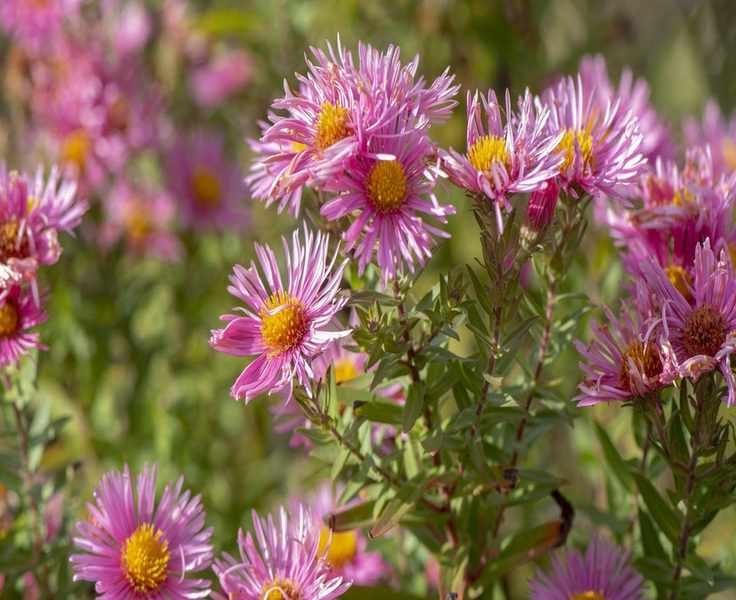
Asters thrive across North America, populating forests, highways, meadows, and marshes. Spotting a tall or mid-sized perennial with small blooms resembling daisies likely means you've found an aster. However, identifying them can be tricky; hundreds of wild aster species exist, especially in North America.
In recent years, botanists have been renaming many aster plants, causing some confusion. While common names are tempting, many plants have different names regionally, making scientific names essential for clarity.
These asters are remarkable perennial plants that infuse gardens and borders with late summer and fall hues. They resist deer browsing and adapt well to colder US hardiness zones, providing sustenance for butterflies and various insects. In summary, these plants are invaluable.

Why Grow Asters?
Asters stand out as vital fall-flowering perennials. They adapt well to full sun and well-drained soil, delivering colorful displays in late summer and fall. Neat, bushy varieties have been bred for container gardening.
Their vibrant daisy-like flowers come in many shades and attract butterflies, including monarchs. Plus, they make lovely cut flowers.
No special conditions are necessary for growing asters. Propagation is simple by dividing and replanting the strongest shoots in spring. Here are some top varieties to consider.
1. Aster alpinus
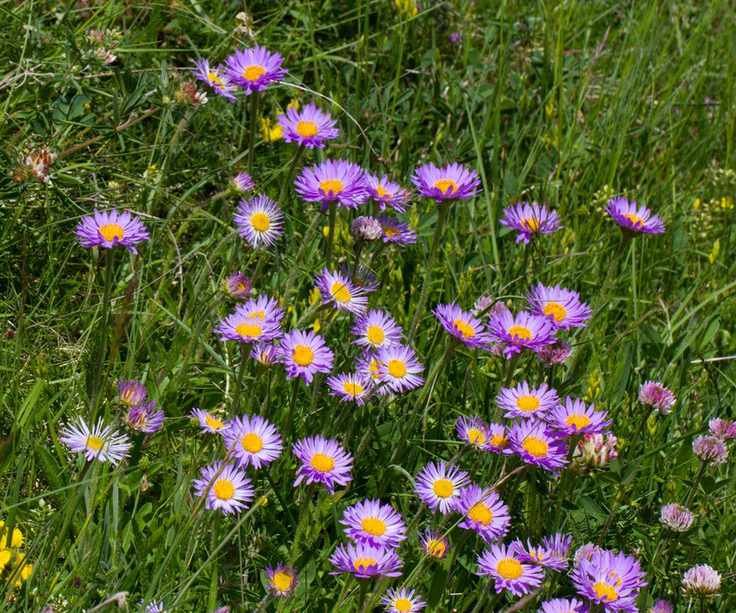
Common name: Alpine aster
Scientific name: Aster alpinus
Origin: Europe
This low-growing, spreading plant features individual purple or pink flowers, making it perfect for pink summer borders. It blooms earlier and remains shorter than many others in this category, serving as excellent ground cover.
Top variety: 'Dark Beauty' (deep purple, 20in.)
Good for: Gravel gardens, sunny borders, and large containers.
Care: Requires full sun and good drainage, especially in winter. Regular division supports abundant blooms.
Hardiness: USDA Zone 3-8
Height: 4-12in
2. Aster amellus
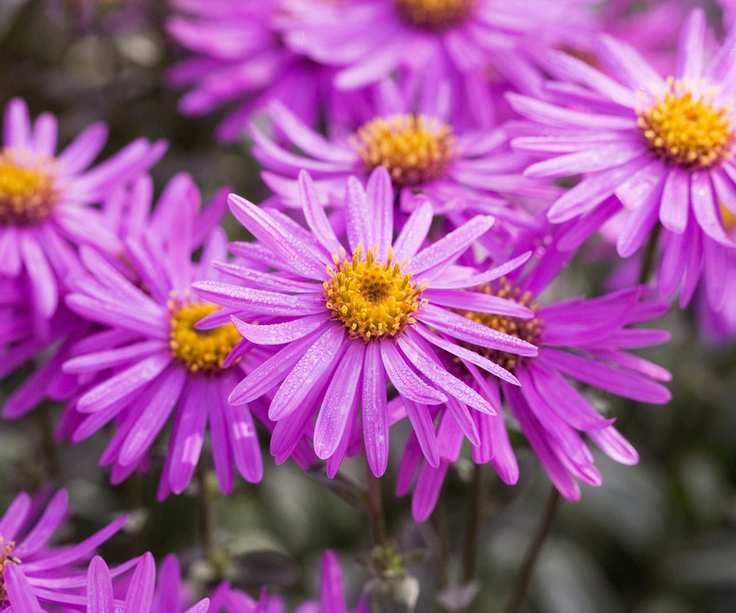
Common name: Italian aster
Scientific name: Aster amellus
Origin: Europe, Russia
This compact and clump-forming aster has a woody base, featuring large, yellow-eyed daisies in purple, blue, or pink. It's resistant to mildew but may not live long.
Top varieties: 'Pink Zenith' (pink daisies, 20in.), 'Violet Queen' (violet-purple flowers, 16in.).
Good for: Front borders, fall blooms, and attracting butterflies.
Care: Thrives in full sun with fertile soil and good drainage; tolerates some light shade. Taller varieties may need staking. Regular lifting and dividing are recommended.
Hardiness: USDA Zone 5-8
Height: 12-36in
3. Aster x frikartii
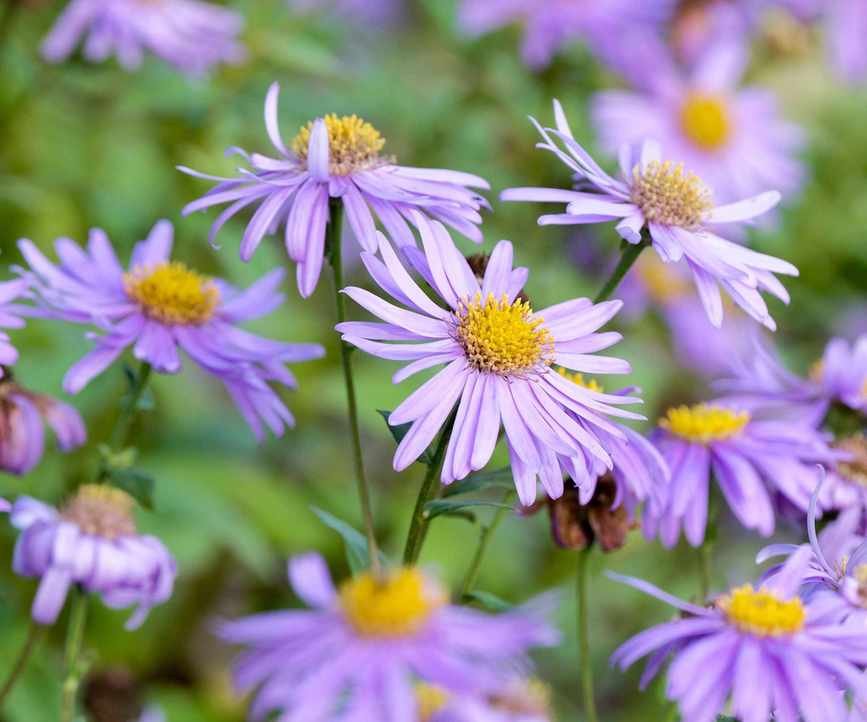
Common name: Frikart's aster
Scientific name: Aster x frikartii
Origin: Garden hybrid
A top performer among long-flowering perennials, these multi-branched, mildew-free plants yield late summer and fall daisies, showcasing lavender-blue rays around a golden center.
Top varieties: 'Mönch' (lavender blue, 3ft), 'Wunder von Stäfa' (lavender blue, 2ft).
Good for: Mixed borders, perennial gardens, attracting butterflies, and cutting.
Care: Plant in spring in well-drained fertile soil and full sun. Support taller varieties from mid-spring. Regular division is necessary.
Hardiness: USDA Zone 5-8
Height: 18-36in
4. Eurybia divaricata

Common name: White wood aster
Old scientific name: Aster divaricatus
Scientific name: Eurybia divaricata
Origin: Eastern North America
In late summer and fall, clusters of small white flowers bloom on wiry stems, often drooping to the ground. This shade-loving aster is lovely yet subtle.
Top variety: 'Eastern Star' (taller with larger flowers, 2ft).
Good for: Wild gardens, restorations, and natural ground cover beneath trees.
Care: Plant in spring in light shade and allow to grow naturally without support.
Hardiness: USDA Zone 4-8
Height: 15-18in
5. Symphyotrichum ericoides
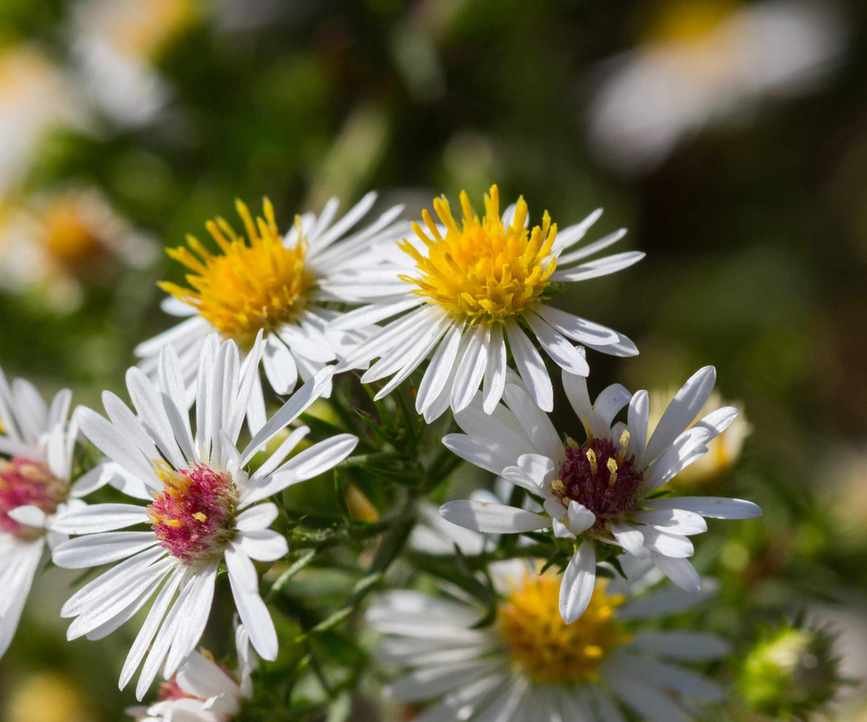
Common name: White heath aster
Old scientific name: Aster ericoides
Scientific name: Symphyotrichum ericoides
Origin: Eastern North America
These tidy, spreading plants produce elegant white flowers in arching sprays late in fall. Usually mildew-free, they come in beautiful white, pink, or purplish varieties.
Top varieties: 'Golden Spray' (white petals with a golden eye, 3ft), 'Snow Flurry' (white flowers with low, spreading growth, 8in).
Good for: Mixed borders, perennial gardens, and cut flower gardens.
Care: Plant in spring in fertile soil, thriving in full sun or light shade.
Hardiness: USDA Zone 5-8
Height: 2-4ft
6. Symphyotrichum lateriflorum

Common name: Calico aster
Old scientific name: Aster lateriflorus
Scientific name: Symphyotrichum lateriflorum
Origin: Eastern North America
This aster produces numerous small flowers that create colorful sprays on uniquely branched stems. The flowers start purple and fade to green, with pale yellow centers turning pink, resulting in a 'calico' look. Typically mildew-free.
Top varieties: 'Horizontalis' (spreading branches with pink-eyed white flowers, 2ft), 'Lady In Black' (dark leaves with blushed white flowers, 3-4ft).
Good for: Mixed borders, autumn-focused gardens, and cutting.
Care: Plant in full sun with well-drained fertile soil. Support taller varieties in mid to late spring.
Hardiness: USDA Zone 4-8
Height: 2-4ft
7. Symphyotrichum macrophyllus
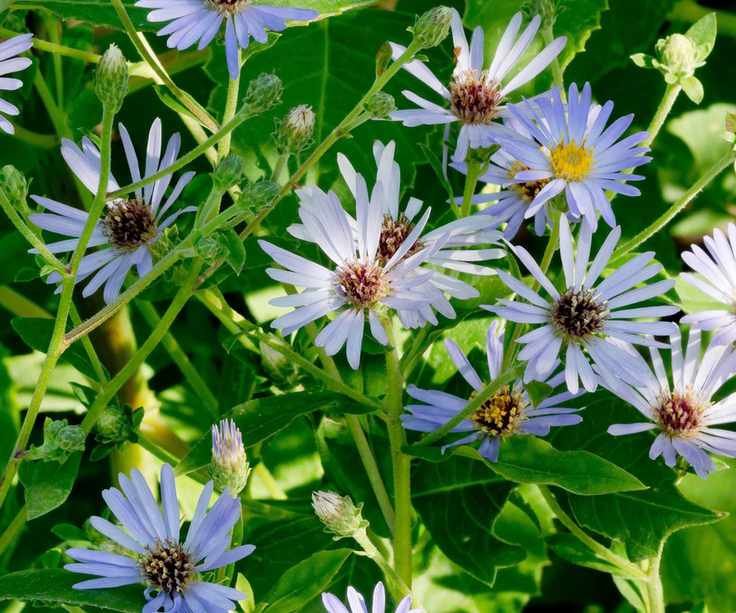
Common name: Large-leaved aster
Old scientific name: Aster macrophyllus
Scientific name: Symphyotrichum macrophyllus
Origin: Eastern North America
Clusters of golden-eyed, lavender-hued white flowers follow broad foliage, serving as attractive ground cover in spring. Adaptable to dry shade and resistant to mildew.
Good for: Informal fall borders, wild gardens, and dappled shade areas.
Care: Divide carefully due to the woody crown. Support as needed, or allow to spread naturally.
Hardiness: USDA Zone 4-8
Height: 3ft
Aster seed packets can be bought online from Amazon.
8. Symphyotrichum novae-angliae

Common name: New England aster
Old scientific name: Aster novae-angliae
Scientific name: Symphyotrichum novae-angliae
Origin: North America
This resilient plant flourishes widely, showcasing large, vibrant flowers in late summer and fall. Colors range from violet to red, pink, or white, often exceptionally vivid. Mostly mildew-free, it's among the best native perennials available.
Top varieties: 'Harrington's Pink' (golden-eyed pink, 4ft), 'Purple Dome' (vibrant purple, late flowering, 2ft).
Good for: Prairie plantings, wild gardens, mixed borders, cutting, and attracting butterflies.
Care: Plant in spring in quality soil and sunny spots. Support taller varieties and lift, divide, and replant every 2-4 years.
Hardiness: USDA Zone 4-8
Height: 2-6ft
Buy New England asters from Nature Hills.
9. Symphyotrichum novi-belgii
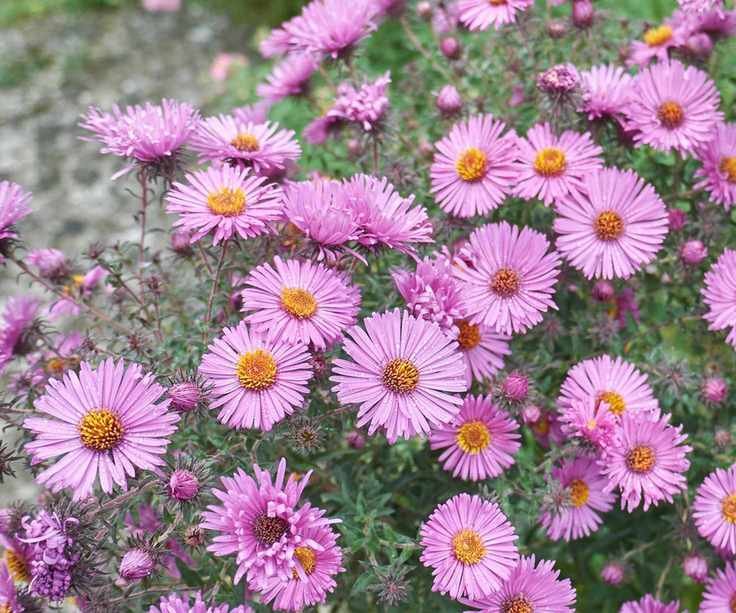
Common name: New York aster
Old scientific name: Aster novi-belgii
Scientific name: Symphyotrichum novi-belgii
Origin: Eastern North America
This native plant is vigorous and adaptable, featuring single or double daisies in various colors during late summer and fall. Dwarf and bushy varieties are increasingly available.
Top varieties: 'Marie Ballard' (double blue, 3ft), 'Professor Anton Kippenberg' (lavender blue, 12in), Showmakers Series (rounded plants in seven colors, great for containers, 15in).
Good for: Prairie plantings, wild gardens, mixed and perennial borders, cutting, and butterfly attraction.
Care: Plant in spring in fertile, well-drained soil, in sun or partial shade. Lift, divide, and replant vigorous segments every other year. Prevent mildew by maintaining consistent summer moisture.
Hardiness: USDA Zone 4-8
Height: 2-5ft
Buy 'Professor Anton Kippenberg' from Nature Hills.
10. Symphyotrichum oblongifolius
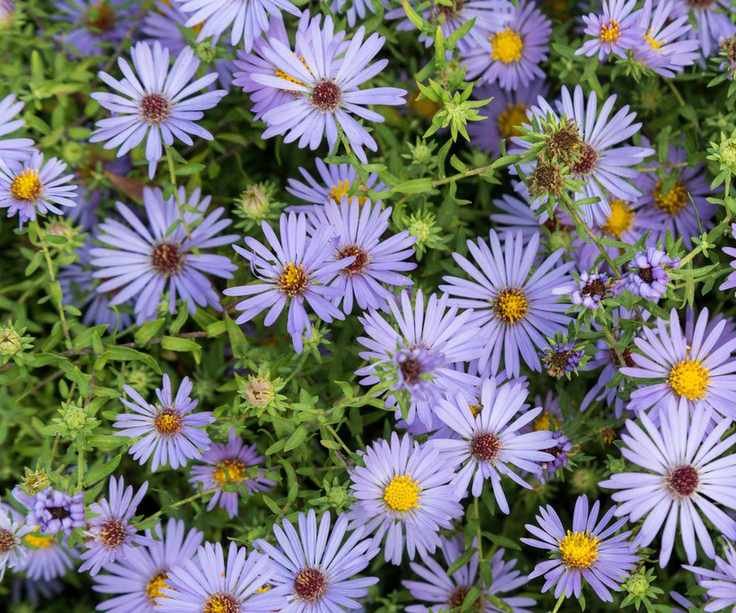
Common name: Aromatic aster
Old scientific name: Aster oblongifolius
Scientific name: Symphyotrichum oblongifolius
Origin: Eastern North America and Midwest
Common throughout the east and Midwest, the aromatic aster has minty-scented foliage when crushed. It blooms late in the season with yellow-eyed, violet-blue daisies, often semi-double, creating a striking fall display.
Top varieties: 'October Skies' (blue with lavender tint, 1.5ft), 'Raydon's Favorite' (taller, richer lavender blue, 3ft).
Good for: Prairie plantings, wild gardens, mixed borders, and perennials.
Care: Prefers well-drained soil and sunlight, handling summer drought better than most asters. Avoid wet winters; generally mildew-free.
Hardiness: USDA Zone 4-8
Height: 1.5ft-3ft
FAQs
Why Do Asters Get Mildew?
Powdery mildew affects many plants, covering leaves with gray fungus that dries, turns brown, and drops off. While this can weaken the plants, it rarely proves fatal.
Fortunately, some good news exists: the mildew affecting asters does not impact roses or other plants. Additionally, many asters possess natural mildew resistance. While infected plants may appear unsightly, they usually endure.
Mildew tends to thrive in hot, dry summers and when soil dries out. Overcrowded plants are more susceptible, especially those with lower foliage. To combat this, maintain moisture through irrigation in summer, provide ample space, and regularly divide plants to prevent overcrowding.
Finally, opt for mildew-resistant varieties. New York aster, Symphyotrichum novi-belgii, is among the most prone to infection, whereas New England aster, Symphyotrichum novae-angliae, is generally resistant, along with Italian aster, Aster amellus, and Frikart's aster, Aster x frikartii.
Asters are truly remarkable perennials. Regardless of the variety chosen (or perhaps several!), they are sure to impress. Consider pairing them with other striking perennials like coneflowers or vibrant rudbeckias for a stunning display.
For further aster insights, check our guide on growing climbing asters to adorn fences and walls with daisy-like blooms.



