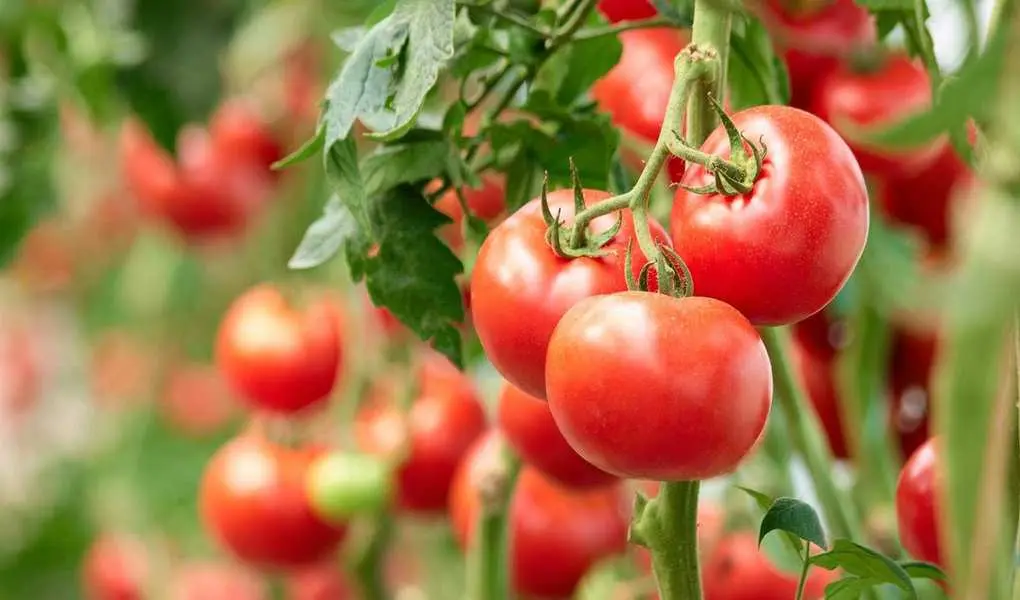
This season marks my first foray into vegetable gardening, and I'm eager to succeed. Through extensive research, I found a fantastic technique called the tomato string method, which is simple yet effective for cultivating healthy tomato plants and ensuring a bountiful harvest.
While various methods exist for growing tomatoes, I specifically needed one that works well in containers. The tomato string method stands out as it enables vertical growth using just a piece of string to support the stems. This approach is both economical and space-efficient.
Moreover, it minimizes common growing errors by enhancing air circulation, which helps deter pests and prevent fungal issues. Consequently, my tomato plants are thriving, producing fruit quickly without any sagging stems. Read on to discover the advantages of this method and how to implement it in your garden.
Understanding the Tomato String Method
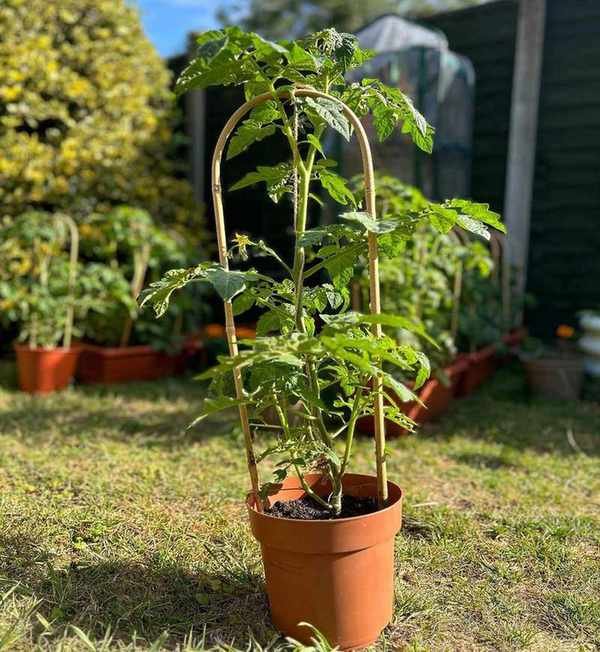
The tomato string method, as depicted above, involves a vertical setup where a length of string (available at Walmart) supports your tomato vines.
"To enhance your yield's quality and quantity, train your vines to grow upwards. This orientation exposes your tomatoes to better growing conditions," advises gardening expert Andy Thewlis.
This method is particularly beneficial for indeterminate tomatoes, which require extra support as they grow taller. I'm utilizing it for Gardeners' Delight cherry tomatoes (seeds from Burpee).
In addition to providing support, the tomato string method offers several benefits.
I've encountered no issues with prevalent tomato diseases, such as leaf curl, blight, or powdery mildew, primarily due to enhanced air circulation. Additionally, pests have been less of a concern since the vertical growth exposes the stems and leaves.
"This method keeps foliage healthier by reducing moisture and improving sunlight exposure, which is crucial for ripening and flavor development," notes gardening specialist Michael Clarke.
For those with limited space, using this method to nurture tall, healthy tomato plants in pots is particularly advantageous.
"It allows for more plants in confined spaces, and since the fruits are elevated, they are easier to see, harvest, and prune," adds Michael.

Implementing the Tomato String Method
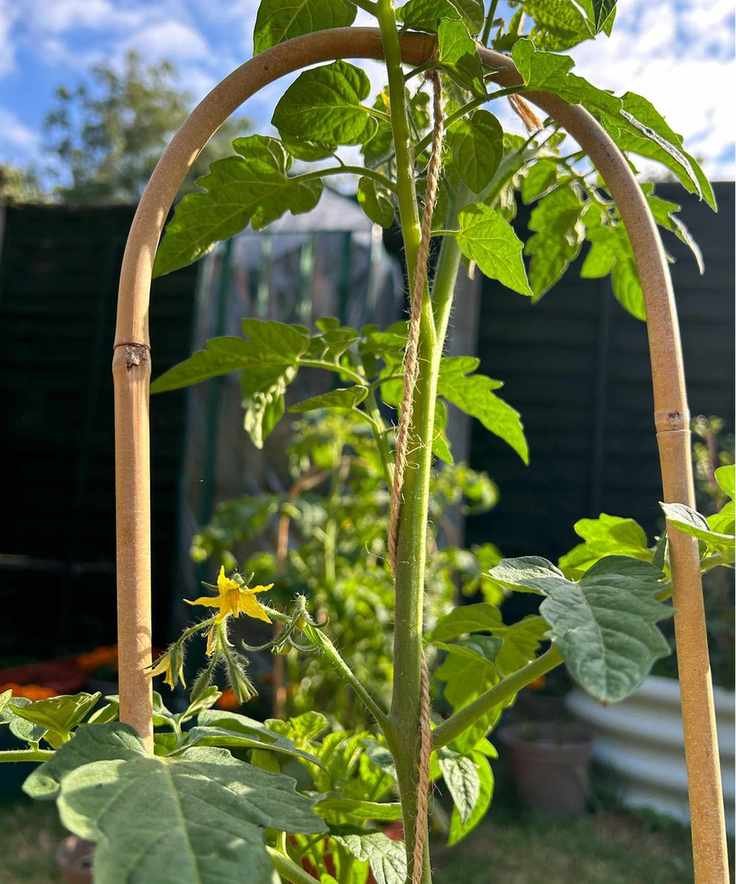
For the tomato string method, you'll need a few supplies: string or garden twine (from Amazon), along with a plant stake for support overhead. I prefer using bamboo stakes (from Amazon) as they suit my container setup perfectly.
"Select a stake taller than your tomato plant's expected height to ensure proper support for its growth," suggests Drew Swainston, a gardening content editor. This helps avoid any damage from sagging stems, especially when you need to add taller supports as your plants grow.
Begin by placing the string beneath the plant's roots during planting.
"Burying the string under the rootball stabilizes it and prevents any risk of snapping the stem in high winds if attached directly," Drew explains.
You can also use a ground stake (from Amazon) to secure the string's bottom.
Next, attach the top of the string to your support, creating a straight vertical line.
Crucially, gently wrap the tomato stem around the string as it grows. Continue this wrapping as it ascends, resulting in a sturdy, upright plant.
Essential Items for the Tomato String Method
Bamboo U-Hoop Plant Support
These hoop supports provide a structure for your tomato string setup.
Natural Jute Twine
This twine is soft and minimizes damage to your plants while staking.
Plastic Plant Nursery Pots
I use large nursery pots to cultivate my tomatoes with this method, benefiting from their drainage holes for moisture control.
Regular Maintenance for Your Tomato Plants
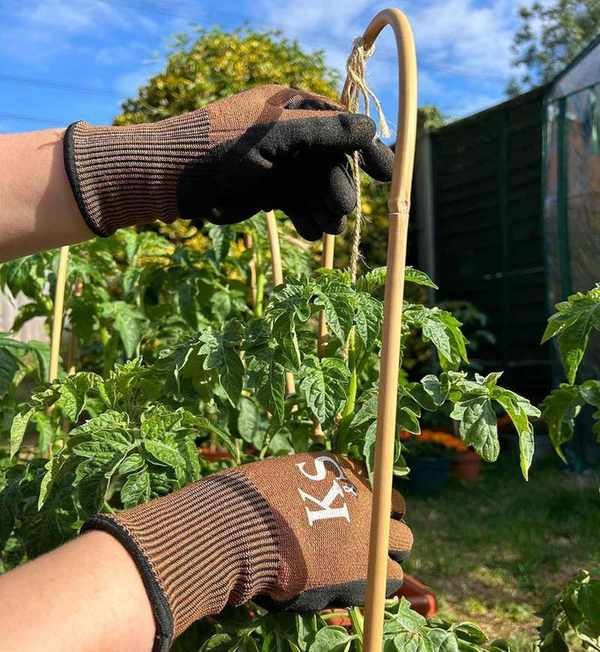
A common mistake with the tomato string method is neglecting your plants. This technique requires consistent monitoring and adjustments; as new growth appears, wrap it around the string for support.
Another advantage is the ease of pruning your tomato plants. The string method allows for straightforward access to remove 'suckers' (shoots between the main stem and branches) and excess foliage, which enhances sunlight exposure for the fruits and boosts yields.
"As your tomato vine climbs, prune leaves near the soil. This promotes air circulation beneath the plant and helps prevent soil-borne diseases from reaching the foliage," advises Andy.
FAQs
When Should You Stake Tomato Plants?
Staking should occur while the plants are young and flexible, ideally when they stand 12–18 inches tall. However, it's still possible to stake larger plants that are struggling to stay upright, although flexibility may be limited.
This method has significantly contributed to the success of my tomato plants. It simplifies pest monitoring, maintains an optimal environment, and encourages vigorous growth. Additionally, I planted marigolds alongside my tomatoes as companion plants to deter pests and positioned them in a sunny spot to enhance fruiting. If your tomatoes aren't producing, adjusting their growing conditions might be necessary.